
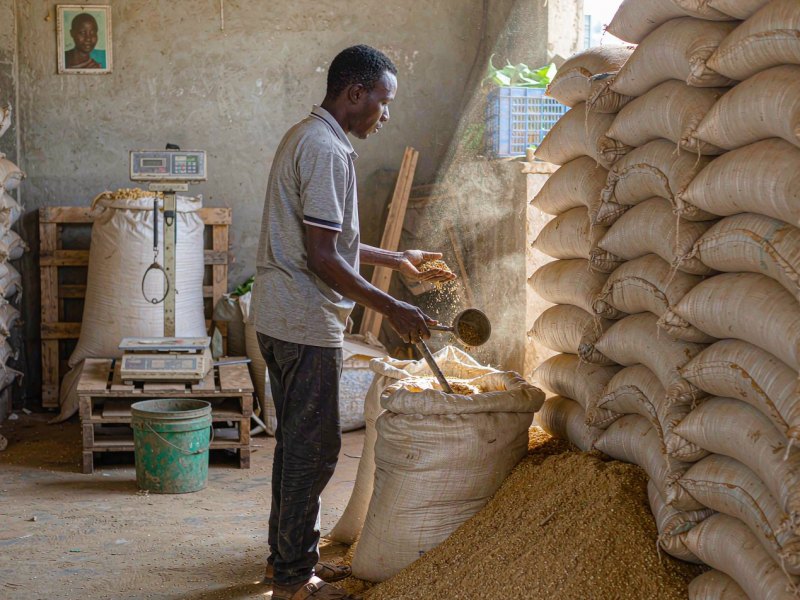
Two price stories collided this month, and together they decide what a bag of feed will cost across West Africa in the first quarter of next year. On the world market, the World Bank Pink Sheet for September shows soybean meal at 447 dollars a tonne, up just over ten per cent in one month and nearly twenty five per cent year on year, while maize stands at about 240 dollars a tonne, up twenty one per cent year on year. In Nigeria the opposite is happening on the farm side, where the AFEX soybean board price for the new harvest slid from around 863 naira per kilogram in mid September to under 600 naira by the fourteenth of October. For a feed miller or a large poultry farm, the question is not whether prices are high, it is when to buy, and from where.
Why the world price keeps climbing
The World Bank food price index stood at 124.1 in September, nearly sixteen per cent above a year earlier. Protein meals have led the move because crush margins, freight and steady demand from Asian and Latin American buyers have kept meal stocks tight. Since West Africa imports a large share of its soybean meal, maize substitutes and premix raw materials in dollars, the world price sets the floor under everything a local mill produces. When the dollar price rises while the naira or the cedi does not strengthen, the landed cost of imported ingredients climbs even faster than the headline number suggests.
Why the local harvest bends the curve
Nigeria harvests most of its soybeans between October and December, and the arrival of new crop always pushes exchange prices down. This year the fall has been sharp, the AFEX spot price of soybean lost roughly a third of its value in four weeks, from a plateau near 863 naira per kilogram through late September to 537 naira on the thirteenth of October, recovering to about 598 the next day. Similar seasonal pressure appears in Ghana, Burkina Faso and northern Cote d'Ivoire as buying shifts from traders to farms. The catch is that the same harvest does nothing to the dollar price of imported meal, so the gap between local and imported protein is at its widest exactly now.
Three buying rules for the coming weeks
First, buy local where quality allows. New crop soybean processed in a well run extruder, with urease activity checked, costs far less per unit of protein than imported meal at current world prices, so this is the season to fill the store rather than to wait for a lower price that may not survive once exporters and crushers compete for the crop. Second, forward buy what stores well. Whole soybeans and maize keep for months under dry conditions while finished feed does not, so contract raw materials ahead and keep bagged feed orders short. Third, reformulate rather than guess. When soybean meal is expensive, crystalline amino acids, full fat soya from the same local beans and modern enzyme systems can cut meal inclusion by two to four percentage points without losing egg size or daily gain.
A local harvest window this favourable does not last, and it rarely returns once export buying begins. If you would like your ration reviewed against today's soybean and maize prices, send your current formula to our technical team on WhatsApp and we will show you where the savings are.