
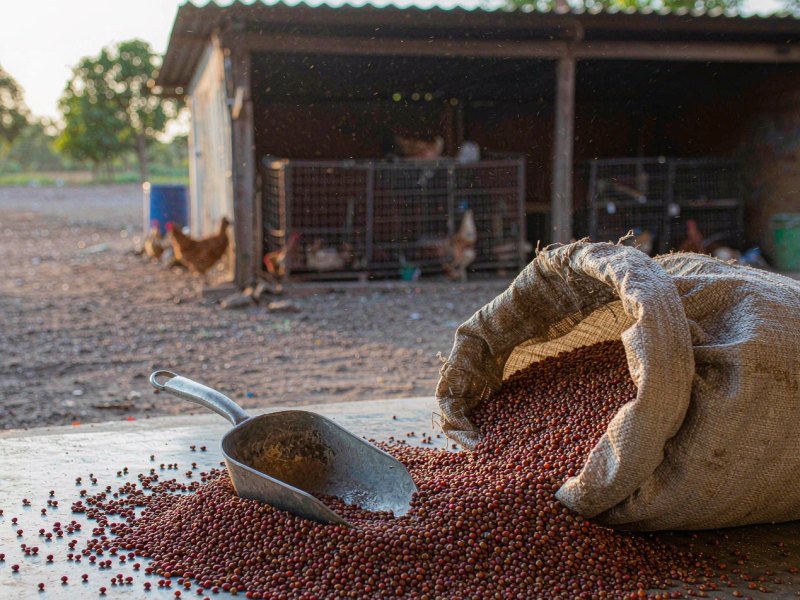
Maize is the reference energy grain in West African poultry feed, and for good reason. It is dense in energy, low in anti-nutritional factors and highly palatable. But when maize prices climb or supply tightens, feed makers look at the sorghum and millet grown across the Sahel and ask a fair question. Can we swap one for the other without losing performance? The short answer is yes, provided the swap is managed rather than improvised.
The starting point is energy density. Maize delivers roughly 3,300 to 3,350 kilocalories of metabolisable energy per kilogram. Good sorghum sits close behind at 3,200 to 3,250, so in practice it can replace maize almost weight for weight. Pearl millet is lighter, typically 3,000 to 3,100 kilocalories, which means a millet-heavy formula needs a little more oil or fat to hold energy at target. Compare laboratory values rather than assumptions, because variety and growing conditions shift the numbers.
The bigger variable with sorghum is tannin content. Brown and red-seeded types carry condensed tannins that bind protein and reduce digestibility, and the effect is worst in young birds. White and cream-seeded low-tannin sorghum behaves much like maize. Without a tannin analysis, use a simple rule and taste the grain. A sharp, bitter, astringent note means tannins are present. For chicks under three weeks, hold sorghum at 20 to 25 per cent of the diet at most.
Replacing the grain does not automatically keep the protein fraction balanced. Sorghum is slightly lower in lysine than maize, and millet protein, while often higher in crude terms, varies widely in digestibility. This is where premix discipline matters. A vitamin and mineral premix will not correct an amino acid gap by itself, so ask your supplier to confirm the lysine and methionine targets and to adjust the synthetic amino acid addition at the same time. Feed the formula, not the habit.
Practical inclusion ceilings look like this. Broiler starter, 25 to 30 per cent sorghum. Broiler grower and finisher, 40 to 50 per cent, and up to 60 per cent with low-tannin grain. Layer diets, 30 to 40 per cent suits production, but remember that sorghum and millet carry no yellow pigment, so yolk colour fades unless a pigment source is added. Local and dual-purpose birds tolerate higher levels than fast broilers because they grow more slowly.
Processing details decide whether the swap works on paper only. Sorghum grinds much like maize and gives good pellet durability because of its starch profile. Millet is a small grain and is easily over-ground into dust that birds waste, so widen the hammer mill screen.
Storage is the risk most often skipped. Sorghum and millet bought from open markets in humid conditions can carry mould and aflatoxin, and the problem stays invisible until performance drops. Buy grain at 13 per cent moisture or below, reject musty lots, and keep a toxin binder in the formula through the rainy season. Cheap grain carrying toxin is the most expensive grain on the market.
Finally, transition gradually. Replace 20 to 25 per cent of the maize every two to three days and watch feed intake and droppings. Weigh a sample of birds weekly. Run one small mill batch and one pen trial before committing a full production run. Keep the results as your reference for the next price spike.
Jinmao Biotech has supplied vitamin and mineral premixes to West African feed producers since 2018. If you are reformulating away from maize, our technical team can review your amino acid balance and premix inclusion rate. Message us on WhatsApp to discuss your formula.