
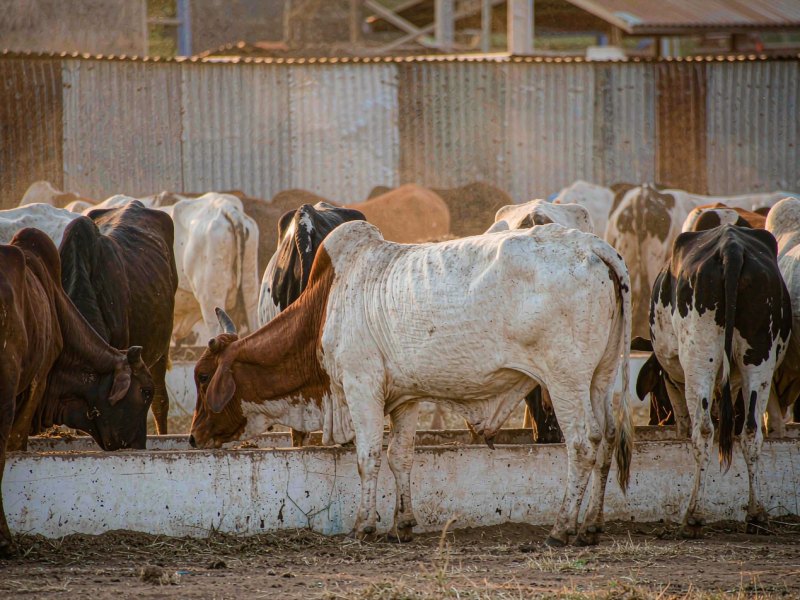
When feed is available and prices are manageable, many cattle farmers are tempted to push more grain into the ration to speed up growth. The problem is that a cow's rumen is a fermentation tank built for forage, and it can only handle so much starch before the fermentation turns sour. That sour state is rumen acidosis, and in its mild, repeated form it is called subacute ruminal acidosis, or SARA. It rarely kills an animal outright, which is exactly why it is so costly. It simply steals performance, one kilogram of feed at a time.
What happens inside the rumen
The rumen is home to billions of microbes that break down fibre and starch. When cattle eat too much rapidly fermentable starch, such as maize, sorghum or cassava peel, acid-producing bacteria multiply and lactic acid builds up faster than the animal can absorb or buffer it. Rumen pH, which normally sits between 6.0 and 6.8, drops below 5.8 and stays there for hours. The fibre-digesting microbes are the first to suffer, so the cow digests forage less efficiently from that day forward. The rumen wall becomes inflamed, and in severe cases the animal goes off feed, staggers or develops laminitis that damages its feet.
The signs most farmers miss
SARA is a hidden problem. The classic warning signs are subtle: a drop in feed intake of five to ten per cent, loose or foamy manure, undigested grain in the dung, cows chewing the cud less than usual, and a slow decline in milk fat on dairy farms. On a beef farm you may simply notice that the same ration no longer produces the same daily gain. Weighing refusals and checking dung once a week will tell you more than any single glance at the animals.
How to prevent it
Prevention is cheaper than treatment and rests on three habits. First, control the starch. Increase the grain portion gradually over two to three weeks rather than all at once, and never let hungry cattle gorge after a long wait at the trough. Second, keep effective fibre in the ration. Coarse forage chopped to the right length keeps the rumen moving and drives saliva production, which is the animal's natural buffer. Third, give the rumen support. A good cattle premix supplies the trace minerals and vitamins that the microbes and the rumen wall need, and where the ration is high in starch, a rumen buffer such as sodium bicarbonate or live yeast can steady the pH through the day. Ask your nutritionist to match the dose to your actual feeding programme rather than guessing.
Why it matters for your bottom line
Because SARA never announces itself, farmers usually pay for it in feed that produces less meat or milk than it should. Fixing it is not about buying expensive inputs. It is about feeding the rumen the way it was designed to be fed. If you would like a premix or buffer recommendation matched to your herd and your local raw materials, send us a message on WhatsApp and our team will help you build a ration that holds its efficiency.