
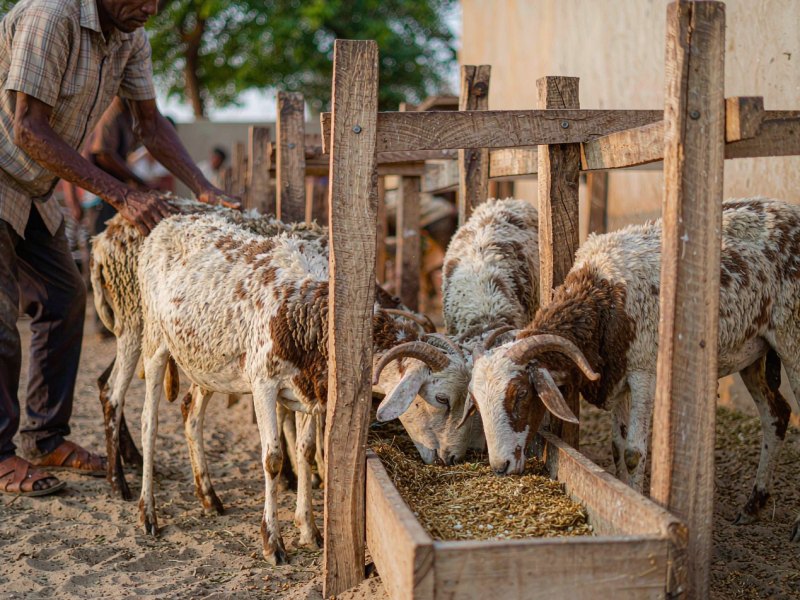
Festival seasons in West Africa turn rams into the most profitable animals on many farms. In the weeks before Tabaski or Christmas, buyers pay well for a ram that is heavy, deep and clean, and the difference between an average animal and a well finished one can be thousands of naira or cedis per head. Ninety days is enough time to turn a good store ram into a market ram, but only if the programme is structured from day one, so here is how to fatten rams in 90 days without wasting money on feed that never becomes gain.
Choosing and preparing the animals
Start with rams between twenty five and thirty five kilograms that look healthy, with sound teeth, bright eyes and no sign of lameness or discharge. Buy them at least two weeks before fattening begins and keep new arrivals in a quarantine pen. During this period ask a veterinarian to deworm them against roundworms and tapeworms, treat for liver fluke where it is common, and vaccinate against PPR and pasteurellosis according to the local schedule. Group animals of similar size together, allow roughly one square metre of shaded, dry floor space per ram, and give each pen enough feeders so dominant animals cannot push the weaker ones away from feed.
Building the ration step by step
Good roughage is the base of the whole programme. Groundnut hay, cowpea hay or well conserved grass hay should be available at all times, because fibre keeps the rumen working. Concentrate is what actually adds weight, so introduce it gradually, starting near three hundred grams per head per day and building up over ten days to eight hundred or twelve hundred grams split into two meals. The total ration should supply fourteen to sixteen per cent crude protein for growth, which local materials such as maize, wheat bran, cottonseed cake or groundnut cake can deliver when they are balanced properly. A mineral premix and free access to salt are not optional extras, they are what allow the animal to use the energy in the ration. Never feed mouldy hay or grain, because mycotoxins will quietly destroy the gain you are paying for.
Water, weighing and observation
A fattening ram in hot weather can drink four to eight litres a day, and dirty water cuts intake faster than any other mistake. Check drinkers morning and evening. Weigh a sample of animals every two weeks at the same hour, before the morning feed. A healthy programme delivers one hundred fifty to two hundred fifty grams of gain per day, which adds up to fourteen to twenty kilograms over the full period. If gains fall below target, look first at feed intake, then at parasites, then at ration balance. Loose manure after a ration change means you moved too fast, so step back one level for a few days.
Timing the market
Work backwards from the festival date so the last two weeks of higher energy feeding land exactly when buyers arrive. Keep simple records of feed used and weight gained, because cost per kilogram gained is the number that tells you whether the season paid. When your ration needs a reliable premix or gut health additives to protect gain through the fattening period, the Jinmao Biotech team supplies sheep premix formulated for West African conditions, and you can reach us on WhatsApp for a recommendation sized to your flock.