
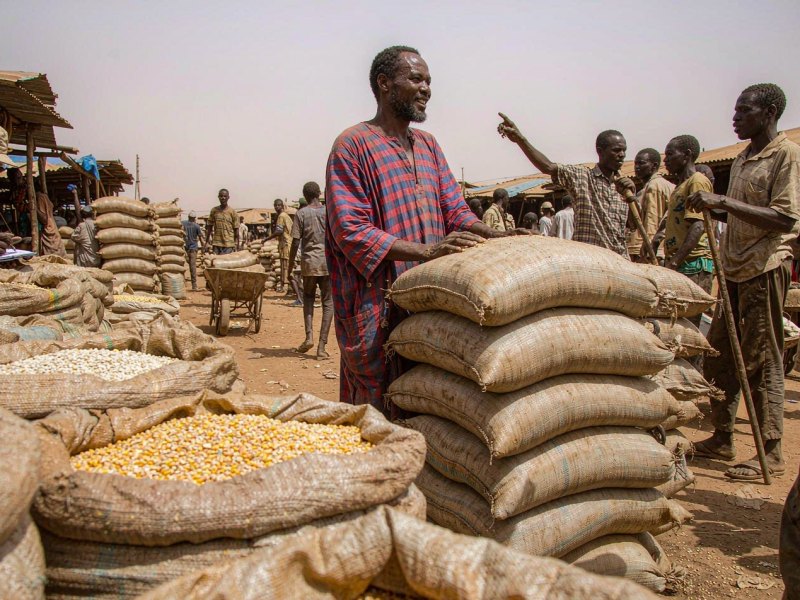
Nigeria's National Bureau of Statistics released the September consumer price report on the fifteenth of October, and for once the headline was friendly. Headline inflation fell to 14.63 per cent from 15.39 per cent in August, the lowest reading of the year, while the food index actually declined by 1.55 per cent within the month. The bureau credited cheaper white maize flour, guinea corn flour, local rice, eggs, onions, palm oil, tomatoes and okra. For anyone who formulates feed, that list reads like a shopping list, which raises the obvious question, if food is getting cheaper, when will feed prices go down in Nigeria as well.
The relief at farm gate is real
Two details in the report matter for feed buyers. First, the farm produce sub-index fell by 2.86 per cent within the month, even though it still stands 18.85 per cent higher than a year earlier. That is the harvest effect, fresh grain arriving from the fields and loosening the market. Second, the pressure is very uneven across the country, with food inflation at 34.40 per cent year on year in Lagos against a fall of 7.47 per cent in Taraba. Where you buy matters almost as much as when you buy.
Why the feed bill lags behind
Feed rarely follows raw produce down, for three reasons. The first is energy, the September report shows energy prices jumping 5.38 per cent within the month and 10.85 per cent over the year, and diesel, haulage and milling costs run through every bag of feed that leaves a mill. The second is the basket itself, feed is not only maize, it also carries soybean meal, wheat offal, premix, enzymes and other additives, and several of those track import costs rather than local harvests, the imported food index was still up 9.19 per cent year on year. The third is behaviour, millers pass cost increases on within days but release price cuts slowly, waiting to see whether the grain relief lasts. Headline inflation of 14.63 per cent still means the general price level is rising, only more slowly than before.
What a practical buyer does now
The window between harvest and the dry season is when grain is usually cheapest, so this is the moment to buy forward, store properly and lock in part of your ration cost. Dry the grain to a safe moisture level, treat against weevils and keep the store aerated, because a spoiled bargain is worse than no bargain. At the same time, reformulate rather than dilute, when maize is cheaper a nutritionist can rebalance energy and protein, but cutting the premix or the gut health programme to save a small share of cost usually costs far more in feed conversion later. The central bank also cut its policy rate from 26.50 to 23.00 per cent at its September meeting, which should slowly ease the cost of working capital for farms that buy inputs on credit. If you want a second opinion on a ration that keeps performance while trimming cost per kilogram of gain, the Jinmao Biotech team formulates premix and feed additives for West African mills and farms, and you can reach us on WhatsApp with your current formula.