
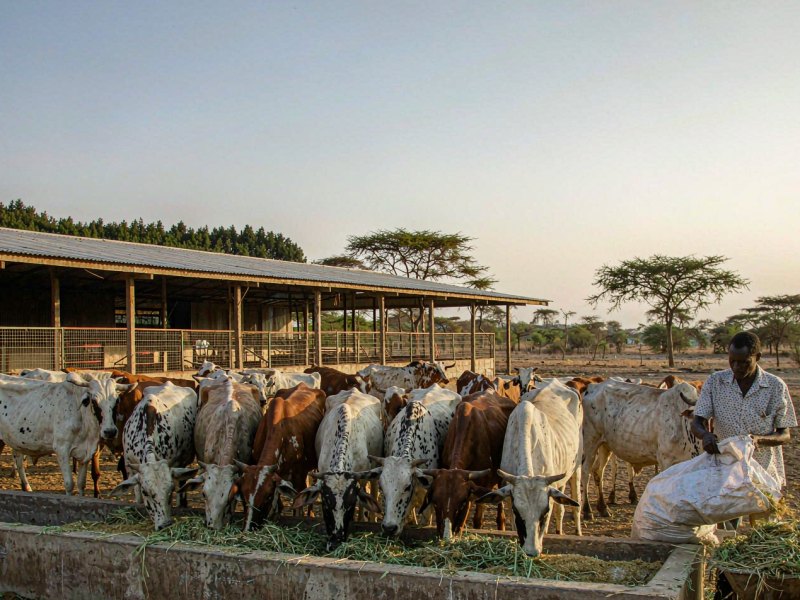
Nigeria has spent the past two years rebuilding the institutional side of its livestock sector, and the direction is now clear. When the Minister of Livestock Development, Idi Muktar Maiha, led a ministry delegation to Governor Mohammed Umaru Bago in Minna on the second of October, he named feed and fodder development as one of the ministry's leading priorities, alongside breed improvement and livestock processing. For anyone who buys premix, concentrate or raw materials in the region, that policy direction matters as much as today's grain price.
Large-scale livestock development centres
According to the minister, the federal government is working with state governments to establish large-scale livestock development centres. States are expected to provide land, while investors and livestock operators develop the different segments of the value chain on it. He also called for strategic centres along the Sokoto to Badagry corridor to improve access and the evacuation of livestock products. The logic is simple, you cannot run intensive herds on open grazing, and you cannot run intensive herds without feed that arrives on time.
The dairy number behind the plan
The most striking figure from the visit was the cost of doing nothing. The minister noted that Nigeria currently spends about one and a half billion dollars every year importing dairy and dairy products, and argued that the country must lift local milk production. His ministry plans to work with stakeholders to introduce improved breeding material that could raise milk yields from about two litres per animal per day to as much as forty litres under good management. Whether individual farms reach that figure or not, the direction of travel is unmistakable, more improved breeds kept in managed systems, and managed animals need balanced rations, mineral supplementation and clean water, not just pasture.
From live cattle to processed products
The minister also urged state governments to use public private partnerships to build modern abattoirs, and to shift from moving live cattle over long distances to moving processed products. Governor Bago, for his part, asked the federal government to reactivate the Lagos to Kano to Jibia railway so that livestock and livestock products can move more cheaply, with fewer losses and less of the tension that long road journeys create. His state already has a working example, the Livestock Productivity and Resilience Support project, known as L-PRES, helped broker an agreement under which Niger Foods supplies two hundred cattle a day to an Abuja abattoir, an arrangement projected to create some twenty thousand direct and indirect jobs. The same project supported a poultry unit at Zaima Farms with the capacity to process about ten thousand chickens a day.
What it means for feed buyers
Three practical consequences follow. First, demand for dairy and beef cattle nutrition, from mineral premixes to energy-dense fattening rations, is set to grow as these centres come online. Second, feed mills and farms that can document consistent quality will be best placed to supply institutional buyers and offtake agreements. Third, farmers who start keeping feed records now, weighing refusals and tracking cost per kilogram of gain, will negotiate from strength when the new systems start looking for suppliers. The ministry's message on feed and fodder is also a signal that raw material prices will stay a live issue. Farms that can formulate flexibly around maize, sorghum, cassava and agro-industrial by-products will ride out the swings far better than farms locked into a single recipe.
If you are planning to supply Nigeria's expanding dairy, beef or poultry feed market, send us a message on WhatsApp and our team will share premix specifications and pricing matched to your rations.