
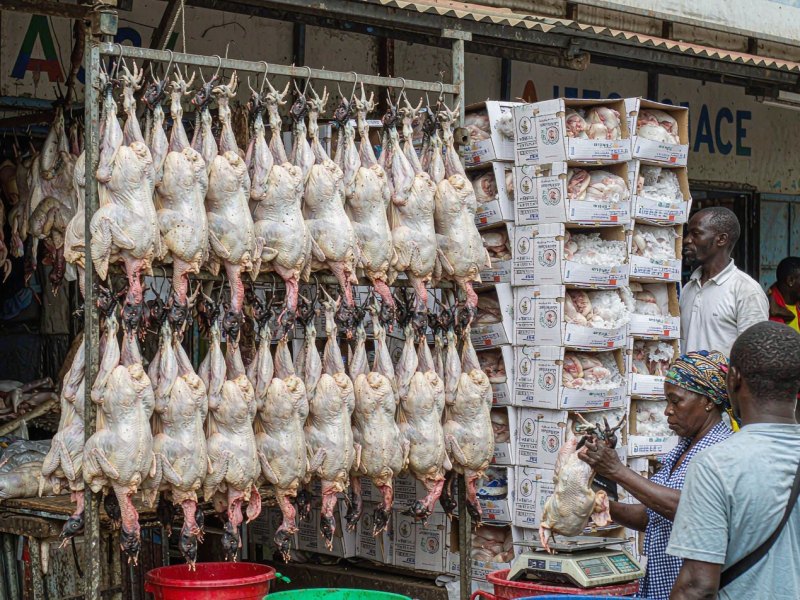
A chicken raised on a Ghanaian farm now often costs the consumer more than a chicken shipped in frozen from thousands of kilometres away. That paradox was at the centre of a poultry round table held in Accra on 26 October 2026, jointly with the Netherlands, and the explanations given there matter for every poultry farmer and feed buyer in the region.
Speaking at the meeting, Deputy Minister of Food and Agriculture John Dumelo pointed to the chain of middlemen between farm gate and dinner table. A farmer may sell a live bird for around 80 Ghana cedis, he said, yet by the time it reaches the final buyer the price has climbed to roughly 200 cedis. Each intermediary in that chain takes a margin, and because consumers cannot easily buy directly from farmers, locally produced chicken struggles to compete with imports on price, even before production costs are counted.
The scale of import dependence is stark. Netherlands Ambassador Hans Akerboom told the same meeting that about 80 percent of Ghana's poultry supply is currently imported. Ghana alone took poultry worth roughly 18 million euros from the Netherlands in 2024, with additional volumes arriving from Belgium, the United States and Brazil. Imported frozen chicken benefits from large-scale production, subsidies abroad and established supply chains, which keeps its shelf price low and squeezes local producers.
The government's response is a mix of diplomacy and investment. At the Accra meeting, Dumelo and Akerboom signed a memorandum of understanding under which the Netherlands pledges technical expertise, knowledge exchange, innovation and investment to help Ghanaian farmers expand production and supply the local market reliably. The partnership feeds into the national Feed Ghana programme and the 24-hour economy initiative. It follows the 270 million dollar agreement signed in London on 22 October between UK investment firm Agrium Capital and Ghana's 24H+ programme, which plans an integrated poultry industry covering feed production, breeding, hatcheries, broiler farms, processing and cold chain logistics.
Farmers, meanwhile, are squeezed from the other side by feed. The Greater Accra Poultry Farmers Association has warned that chicken and egg prices could rise by as much as 15 percent before Christmas, driven largely by the cost of imported feed ingredients. For producers, this is a double burden: feed is the largest single cost on most farms, and the distribution chain takes a further slice of the final price.
The lesson for poultry businesses in Ghana and neighbouring markets is clear. Farms that cut avoidable distribution layers, sell more directly to consumers or institutions, and get more kilogrammes of meat from every bag of feed will be far better placed as these projects mature. Nutrition is where much of that margin is won or lost. Jinmao Biotech manufactures poultry premixes and feed additives for West African feed millers and farms, and our team can help you evaluate your current formulation. Reach us on WhatsApp for advice and pricing.