
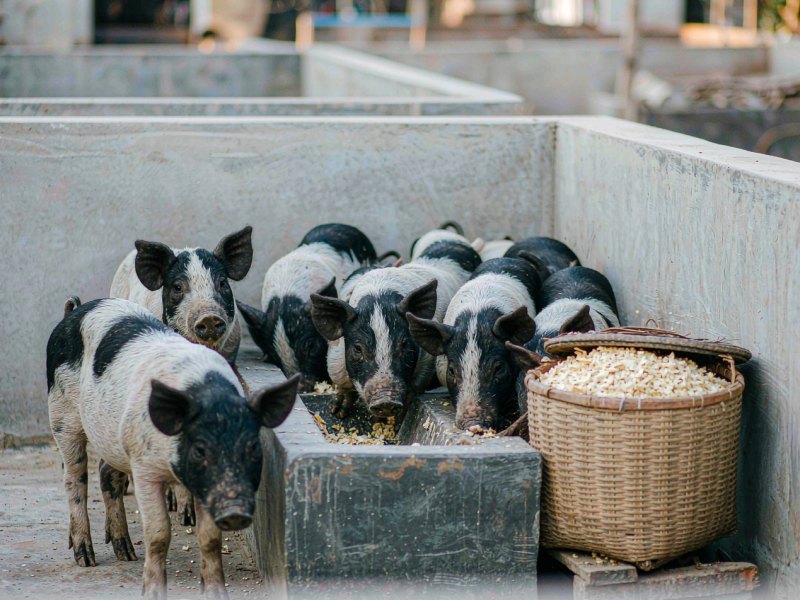
Across southern Nigeria and much of coastal West Africa, cassava peel is one of the cheapest feed materials a pig farmer can get. Markets and garri processors throw away tonnes of fresh peel every week, and pigs love the taste. Used carelessly, however, the same peels can slow growth, thin litters and even poison young animals. The difference between a bargain and a problem is usually three things, how you dry the peel, how much you include, and how you balance the rest of the ration.
What is actually in cassava peel
Dried cassava peel meal is mostly starch and fibre. Its crude protein sits around three to five per cent, far below what a growing pig needs, and it is short of lysine and the sulphur amino acids. It is also low in minerals. The bigger worry is cyanogenic glucosides, the natural compounds that release hydrocyanic acid when the peel is chopped and left wet. Sweet varieties carry less, bitter varieties much more. Proper sun drying, soaking or fermentation drives most of the cyanide off, which is why dried peel is far safer than fresh wet peel straight from the processor.
Safe inclusion rates
Start from the class of pig, not from the price of the peel. Weaned piglets should get little or none, because their appetite is small and any toxin hits them hardest. Ten per cent is a sensible ceiling. Growing and finishing pigs handle sun-dried peel meal well, and most practical guides put the ceiling near twenty per cent of the ration, with some farms pushing to thirty per cent for heavy finishers when the diet is properly balanced with protein. Gestating sows can use more, since their needs are modest, but lactating sows need dense rations and should stay near ten to fifteen per cent. Whatever the class, introduce the level step by step over a week and watch dung, appetite and growth.
Handling, drying and mould
Most cassava disasters on farms are really storage disasters. Peels piled in a heap ferment in hours, and peels dried on bare ground pick up soil, droppings and mould spores. Dry the peel within a day of collection, spread it thin on concrete or a tarpaulin and turn it until it snaps rather than bends, then grind it and store it off the floor in a dry room. If the meal smells musty or shows green or black patches, throw it away, and where your maize or peel carries any risk of mould, add a proven mycotoxin binder to the ration.
Balancing the rest of the ration
Because peel meal is almost pure energy, every cassava-based diet must be rebuilt around it. Add enough soybean meal or fish meal to hold crude protein, use a complete pig premix at the correct dose to supply calcium, phosphorus, salt, trace minerals and vitamins, and consider synthetic lysine where the diet runs short. Never judge a cheap ingredient by the bag price alone, judge it by the cost of every kilogram of gain it produces.
If you want help reformulating a cassava-based ration for your grower or finisher pigs, send us a message on WhatsApp and our nutrition team will check your raw materials against our pig premix range.