
Nigeria Steps Up African Swine Fever Biosecurity at Oke-Aro: What Pig Farms Should Do Now
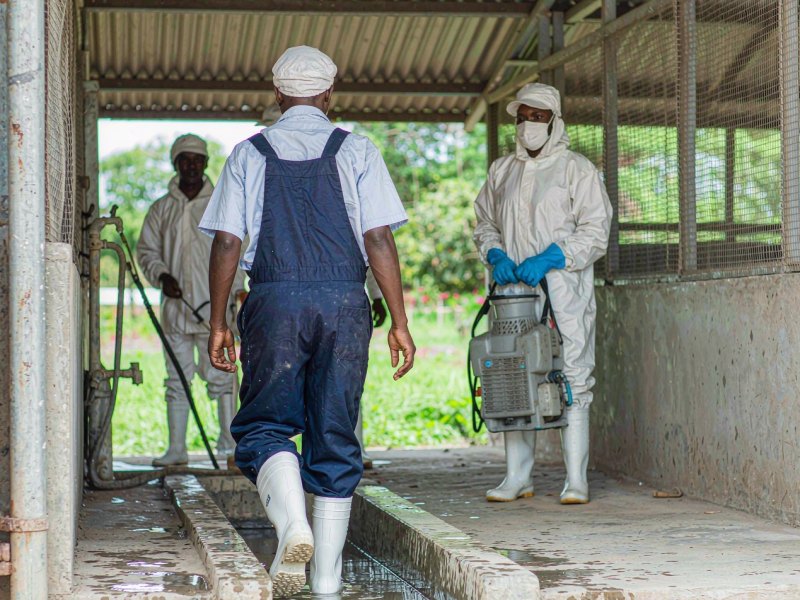
Nigeria has put African swine fever (ASF) biosecurity back at the top of the pig sector's agenda. On 2 October 2026, the Minister of Livestock Development, Alhaji Idi Mukhtar Maiha, launched an ASF control and biosecurity campaign at the Oke-Aro Pig Farm Estate, the large pig production cluster on the Lagos and Ogun axis, and began distributing biosecurity kits to farmers.
What was announced
The campaign is run by the Livestock Productivity and Resilience Support Project (L-PRES). According to the project's National Coordinator, Dr Sanusi Abubakar, the kits include personal protective equipment, boots, knapsack and motorised sprayers, gloves, nose masks, protective goggles and two disinfectants, CID 20 and Virocid. The programme goes beyond equipment: L-PRES also committed to training pig farmers on farm disinfection, correct use of PPE, movement control and general farm hygiene. Dr Abubakar said providing materials must go together with giving farmers the knowledge to use them properly. Oke-Aro was chosen because of the density of pig farmers and pigs on the site, and because the estate has suffered severe ASF outbreaks in the past. The President of the Pig Farmers Association of Nigeria, Adebowale Ayodeji, described ASF as a major challenge for the sector and urged farmers to disinfect regularly and to control the movement of people, pigs, vehicles and equipment between farms.
Why this concerns the whole region
ASF is a highly contagious viral disease that affects only pigs. There is no vaccine and no treatment, and mortality in an unprotected herd can reach 70 percent, sometimes 100 percent within a group. The virus does not infect humans, so the risk is purely economic, but for one farm that risk is total. The pressure is continental rather than local. At the Nairobi International Trade Fair, held from 28 September to 4 October 2026, organisers deliberately left pigs out of the livestock section to avoid spreading the disease, and Kenya's Directorate of Veterinary Services has reported cases in several counties this year, with more than 1,400 pigs reported sick or dead in one outbreak cluster. Nigeria adopted its Livestock Master Plan 2026 to 2040 in April and is expanding pig production, which makes biosecurity the cheapest insurance the sector can buy.
ASF biosecurity in practice on your farm
1. One entrance, one footbath. Keep a single controlled entry point with a working disinfectant bath, clean boots and a change of clothes. Renew the disinfectant solution on schedule, because a dirty footbath gives false confidence.
2. Control people, vehicles and equipment. Delivery trucks, motorbikes, feed vendors and visitors are the main carriers. Load and unload at the gate and never let an outside vehicle enter the pig area.
3. Never feed kitchen or restaurant waste. Swill feeding is one of the classic routes of introduction. Cook any unconventional feed ingredient properly and buy compounded feed from a supplier whose production process is traceable.
4. Quarantine new stock for at least 30 days. Buy breeding animals from a known source with health records and keep them physically separate before mixing them into the herd.
5. After an outbreak, clean, disinfect and wait. Restocking too early is the most expensive mistake. Veterinary advice in the region is to empty, clean, disinfect and leave the unit empty for at least six months before new pigs arrive.
6. Support the pigs you keep. Animals in good nutritional status cope better with every challenge: an adequate supply of minerals and vitamins, clean water and a consistent feed intake do not stop ASF, but they keep the rest of the disease load down and protect growth.
Biosecurity is a daily habit, not a one-off campaign. If you are reviewing your nursery and growing-finishing specifications as part of a farm health plan, our technical team on WhatsApp can help you check the mineral, vitamin and additive levels in your current ration.