
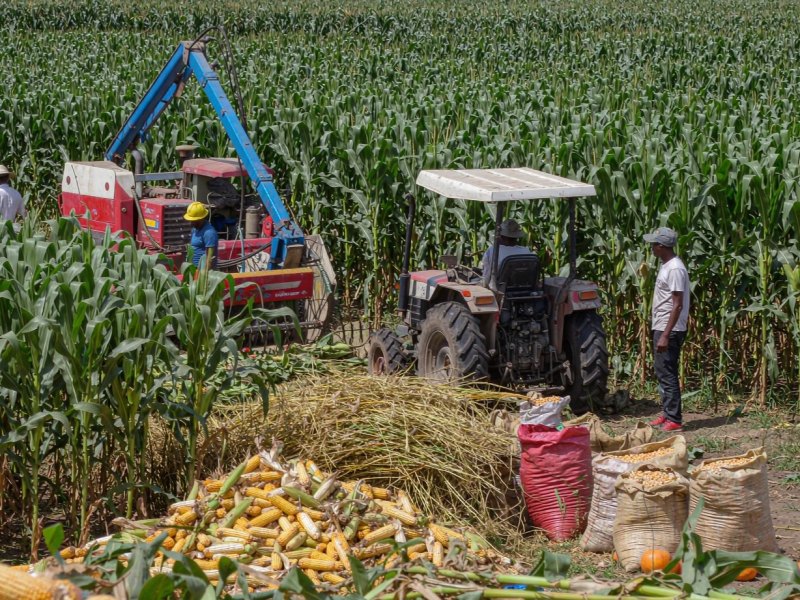
On 17 October, days before World Food Day, President Julius Maada Bio walked through maize fields in Moyamba District to showcase Feed Salone, the flagship food security programme launched in 2023. The stop that matters most to livestock people was Vaama Farm in Bai Largo, home of SLENC Limited, a women-led agribusiness that has grown from a five-acre pilot to 120 hectares of mechanised hybrid maize. According to the Sierra Leone News Agency, the company supplies its grain for poultry feed and employs more than 200 young people.
For buyers wondering where Sierra Leone gets maize for poultry feed, the answer is changing. Across most of West Africa the biggest cost line in compound feed is the energy grain, and small coastal markets have historically imported it or trucked it across borders at painful cost. When a country grows its own feed maize at commercial scale, the arithmetic of local feed manufacturing changes. Every tonne of home-grown grain taken off the import bill lowers the landed cost of a bag of feed and makes locally milled rations competitive with imported finished feed.
The wider Feed Salone picture supports the trend. Reports published around the visit state that rice production reached 1.44 million tonnes in 2025, that self-sufficiency rose from 68 percent in 2023 to 73 percent and that the rice import bill has been cut by more than 18 million US dollars. The President also inspected SMART Farms, where improved rice seed from SLARI is multiplied under irrigation, and joined a symbolic harvest at the military farm in Yoni, where the armed forces cultivate 4,227 hectares of rice expected to fill about 59,900 bags under an off-taker agreement with the Ministry of Finance covering six months of rations. The Ministry of Agriculture, led by Dr Henry Musa Kpaka, has been provisionally allocated 110.5 million new leones for 2027 to expand mechanisation, irrigation and post-harvest infrastructure.
Lesson one for feed buyers is the value of off-take agreements. The military sells its paddy to the Ministry of Finance before harvest, which removes price and market risk from both sides. A feed mill can use exactly the same instrument by contracting acreage with commercial maize growers before the planting season. Buying spot during the April to July lean period, when regional grain is scarcest, is how feed budgets get destroyed.
Lesson two is that small markets are becoming real premix markets. A country that grows its own feed maize still needs protein meals, enzymes, toxin binders, vitamins and trace minerals. The classic first stage of a West African feed industry is local energy grain combined with imported premixes, concentrates and vitamin bases. Sierra Leone is entering that stage, and the same pattern is visible in Guinea and Liberia. Premix and additive suppliers who arrive before bagged feed imports set the standard will shape the specifications for years.
Lesson three is about how scale jumps happen. SLENC moved from five acres to 120 hectares on improved seed, mechanisation and extension support from the Ministry of Agriculture, not by endlessly buying land. For anyone selling into these value chains, the commercial farms emerging under Feed Salone are the customers to talk to now, while their feeding systems are still being chosen.
Whether you buy maize or sell feed inputs, watch Moyamba. If you are setting up or scaling feed production in Sierra Leone, Guinea, Liberia or elsewhere in West Africa, Jinmao supplies poultry premixes and feed additives formulated for tropical rations. Send us a message on WhatsApp to discuss specifications, inclusion rates and volumes.