
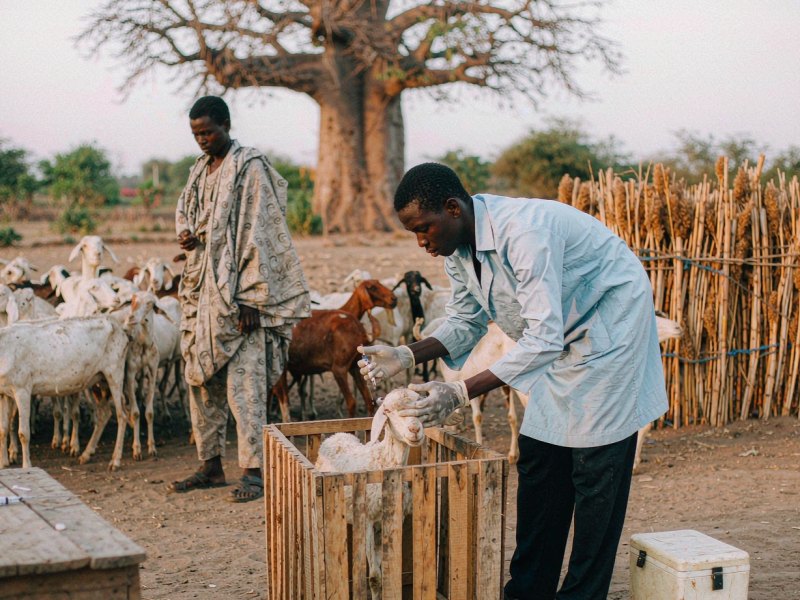
Peste des petits ruminants is the one disease that small ruminant keepers in the Sahel fear more than drought. It moves fast, it moves quietly, and by the time the first goat is lying down with a crusted nose, half the pen has already been exposed. Vaccination is the only practical defence. But a vaccine is not a magic injection. It is a biological product that asks the animal to build an immune response, and that response costs protein, energy and trace minerals. Herders who vaccinate thin animals at the end of the dry season often conclude that the vaccine does not work. Usually the vaccine was fine and the flock was not.
What the disease does. PPR is caused by a morbillivirus spread by close contact, through nasal and eye discharge, shared troughs, crowded markets and newly purchased animals. In an unvaccinated flock, mortality can reach 50 to 80 percent. Survivors are set back for months, with abortion, stunted growth and poor feed conversion. There is no treatment once an animal is sick, and the disease is targeted for global eradication by 2030.
Which animals to vaccinate and when. The live attenuated vaccine, most often the Nigeria 75/1 strain in this region, gives protection from a single dose, with immunity building over two to three weeks and lasting several years. The cold chain is not negotiable. The vaccine must be kept between 2 and 8 degrees Celsius, never frozen, never left in the sun. A warm vial is money thrown away.
Do not vaccinate kids and lambs younger than three months. Antibodies absorbed from colostrum block the vaccine and the animal stays unprotected while everyone believes it is covered. Vaccinate at three to four months, then repeat at six months in high-risk flocks, then annually. Skip animals that are sick, feverish or heavily parasitised, animals that arrived from the market last week, and animals in late pregnancy, which should be handled gently and preferably vaccinated after lambing.
The nutrition side, which most programmes forget. An animal on dry cereal straw with four to five percent crude protein cannot build antibodies efficiently. Three weeks before and three weeks after vaccination, the flock should be on a supplement of 14 to 16 percent crude protein, at 150 to 250 grams per head per day. Cottonseed cake, groundnut cake or a complete sheep and goat pellet all work. Add a real mineral premix, not only a salt block, at 10 to 20 grams per head per day, because zinc, selenium and vitamin E are directly involved in immune function and are the first things missing from dry-season forage. Water must be available at all times, since a dehydrated animal responds badly to any vaccine.
Deworm two weeks before vaccination, not on the same day. A heavy worm load blunts the response and stacking two stresses in one afternoon is a good way to lose the weakest animals.
In the 72 hours after. A mild fever and a small lump at the injection site are normal and disappear on their own. Watch for animals that stop eating, breathe fast or swell at the neck. Write down the batch number, the date, the number of animals and the next due date, in a notebook that stays in the shed. New animals should be quarantined for 21 to 30 days before they join the flock, and market-bought animals are the single biggest risk most farms carry.
If you are building a vaccination and nutrition programme and want a premix that matches local forage, our ruminant range covers the trace minerals and vitamins discussed here. Send your flock size and current ration on WhatsApp for a formulation suggestion.