
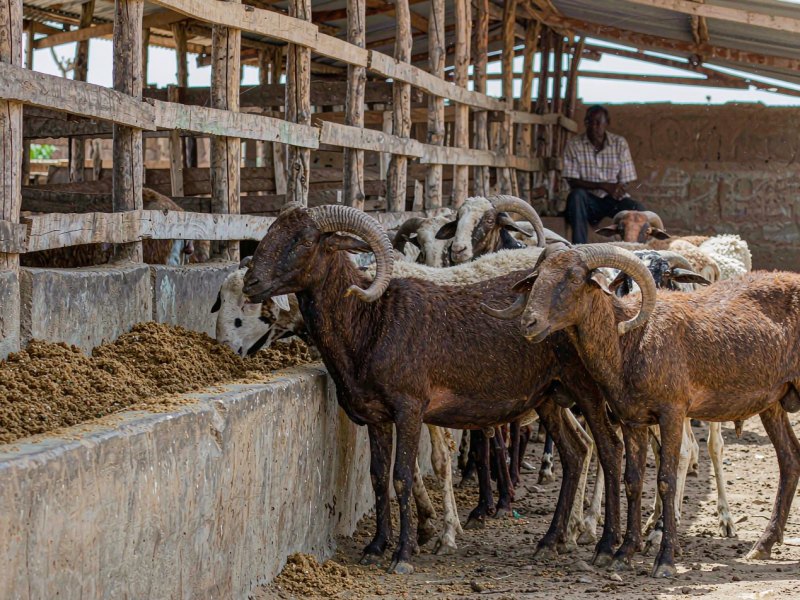
In Nigeria, Ghana and Côte d'Ivoire, palm kernel cake (PKC) is often the cheapest protein and energy source a sheep farmer can buy, because oil palm crushing mills produce it locally in large volumes. Whenever maize and soybean meal prices climb, fattening operations switch part of the concentrate to PKC. That decision usually saves money, but only when the inclusion rate is controlled and the rest of the ration is balanced to cover its gaps.
What PKC brings to the ration
Mechanically pressed PKC typically carries 16 to 19 percent crude protein, but that protein is short of lysine and methionine, the amino acids growing rams and lambs need most. Its energy value is moderate: cake from traditional screw presses holds 8 to 13 percent fat, while solvent-extracted cake falls closer to 4 to 6 percent. Crude fibre runs high, around 12 to 16 percent, so a heavy PKC ration fills the rumen before the animal has eaten enough energy for fast gain. On the plus side, PKC is palatable, very low in starch and far safer against acidosis than maize-heavy mixes.
Safe inclusion rates for fattening sheep
The practical guideline for fattening sheep and goats is 20 to 40 percent of the concentrate mix, expressed on a dry matter basis. Tropical feeding trials have supported even higher rates, but West African farms rarely have the amino acid and mineral precision needed to go beyond 40 percent profitably.
- Start at about 10 percent and step up every 3 to 4 days as intake stabilises, so rumen microbes adapt to the new fat and fibre profile.
- Keep 20 to 30 percent when the rest of the ration is maize or cassava, since those energy feeds still rely on the protein PKC supplies.
- Move toward 40 percent only if you add a true protein source such as soybean meal or fish meal at 5 to 8 percent to repair the amino acid gap.
- Never switch diets suddenly. Animals taken straight from pasture to a heavy PKC concentrate lose days of intake during adaptation.
The balances that decide profit
First, amino acids: PKC protein is lysine-poor, so pairing it with a small dose of quality protein improves feed conversion quickly. Second, energy: above 40 percent, average daily gain usually drops as fibre crowds out energy intake. Third, minerals: PKC is rich in phosphorus but poor in calcium, so keep a calcium source such as limestone in the mix and hold the calcium to phosphorus ratio near 2 to 1. A premix designed for small ruminants closes the zinc, copper, selenium and vitamin gaps at the same time. Fourth, fat quality: the oil in PKC oxidises fast in tropical heat, and oxidised fat depresses intake.
Buying and storing PKC in the tropics
- Fresh cake smells nutty and looks tan to light brown. A paint-like or rancid smell means oxidised fat that will cut feed intake.
- Buy at 12 percent moisture or below, and reject lumpy bags with white or black mould patches, which signal aflatoxin risk.
- In the rainy season, order quantities you can finish within 4 to 6 weeks and store the bags on pallets, away from walls, in a ventilated shed.
For a 90-day fattening plan, a starting point of 25 to 30 percent PKC, a small dose of quality protein and a small ruminant premix at label rate covers most farm situations. Jinmao Biotech produces premixes and feed additives for West African small ruminant operations, and our technical team can help you set the right PKC level for your local ingredients. Reach us on WhatsApp for inclusion rates and samples.