
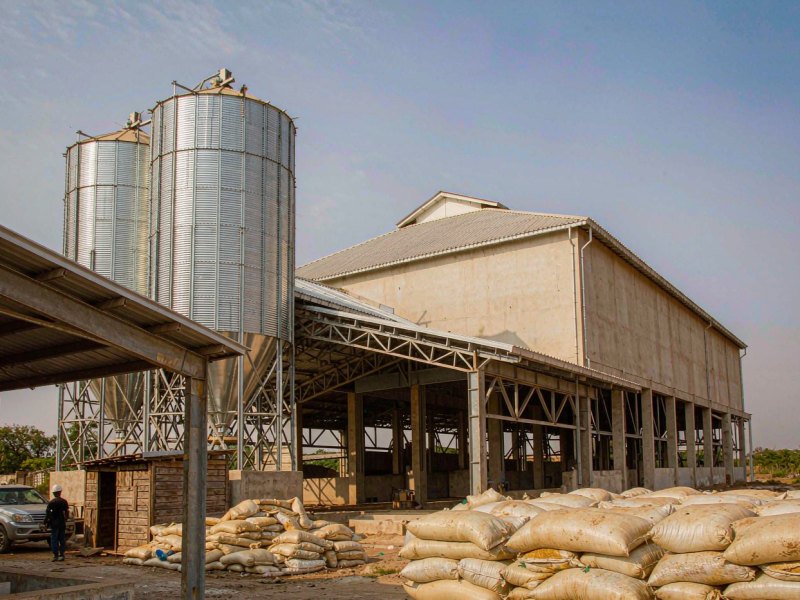
On 4 November 2026, Olam Agri announced plans to invest about 400 million dollars across its African food and feed processing operations through 2028, and animal feed sits at the centre of the plan. For anyone who wonders what the Olam Agri 400 million dollar feed investment means for West Africa, the short answer is more local capacity in three markets at once: Nigeria, Cameroon and Côte d'Ivoire, with Ghana included for grain processing and pasta.
The details are concrete. In Nigeria, the group will establish a third animal feed plant to expand poultry and fish feed production, add semolina capacity and put 850 new trucks on the road for distribution. In Cameroon, a dedicated poultry feed plant with an annual capacity of 300,000 tonnes is expected to begin operations in early 2028. In Côte d'Ivoire, the company enters food and feed processing for the first time, with investments covering wheat milling, animal feed production and poultry breeding. The programme builds on roughly 115 million dollars the group has already invested in West African processing since 2024.
The sourcing side deserves as much attention as the plants. At full capacity, the new mills are expected to purchase more than 500,000 tonnes of maize and soybeans every year from over 130,000 smallholder farmers. For growers near the Cameroon grain belt or northern Côte d'Ivoire, that is a real opening: contract production, delivered with clean dry grain and basic storage, can become a stable income rather than a gamble on the open market. It also means local maize and soybean prices gain a floor of industrial demand that did not exist before.
Announcing the plan, Saurabh Mehra, head of food and feed processing at Olam, said populations are growing, incomes are rising and diets are changing, and that demand for food, feed and protein will keep climbing. That logic is backed by OECD and FAO projections cited around the announcement, which see meat consumption in Africa rising by about a third over the next decade. Large traders locking in processing capacity today are positioning for that demand curve, not for next season.
For feed buyers and farms, three practical moves follow. First, if you grow maize or soybeans in Cameroon or Côte d'Ivoire, track the commissioning timeline of the new plants and invest now in drying and storage so your grain meets factory specifications. Second, if you buy finished feed, the arrival of new capacity is a moment to negotiate delivery terms and ask for formulations built on local raw materials. Third, if you mix on farm, expect firmer demand and possibly firmer prices for local maize and soybean meal after 2027, and plan purchases and storage accordingly.
More local feed capacity is broadly good news for West African livestock, because it shortens supply chains and cushions the currency swings that make imported feed unpredictable. The farms that benefit most will be those ready on the sourcing side, with dry grain, decent storage and a premix-backed formulation that turns local materials into consistent feed. Jinmao Biotech works with feed producers across West Africa on exactly that step, and we are glad to discuss formulations for your raw materials on WhatsApp.