
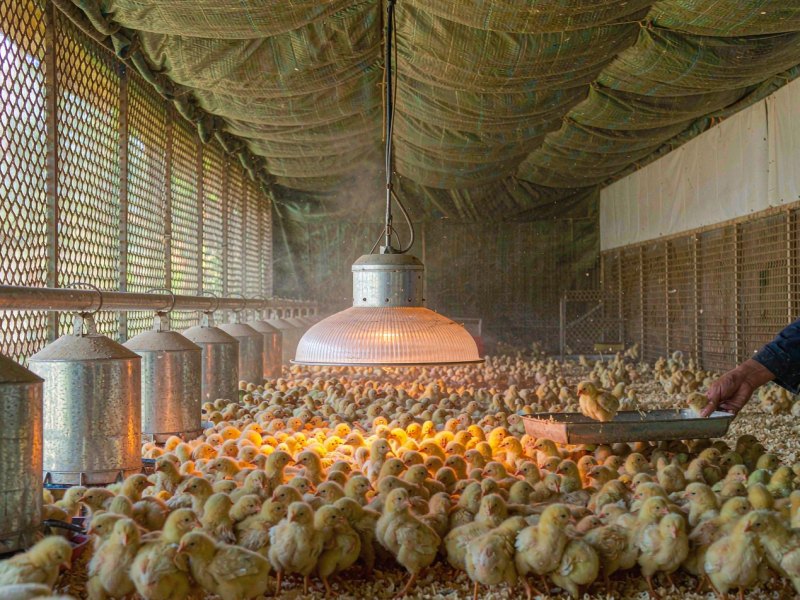
Something unusual happened in Nigerian food markets this quarter. The cost of cooking a pot of jollof rice, the country's most watched food price basket, recorded its biggest quarterly fall since the index began in July 2016, and the single biggest driver was chicken. For feed distributors and premix buyers, the question is no longer whether poultry demand is recovering, but how fast restocking will rebuild feed volumes, and where the next cost squeeze will come from.
What the numbers show
SBM Intelligence's third quarter 2026 Jollof Index tracked chicken costs across 13 markets between June and September. In Kano, traders reported chicken prices falling from 7,000 to 4,500 naira per kilogram, roughly 5.17 to 3.33 US dollars at the conversion used in the report. The headline 11.5 percent fall in the overall basket was later revised to 8.5 percent after a recording error in two Ibadan markets, so the recovery is real but localised, with stronger supplies reaching markets from farms in Jos, Kaduna, Oyo and Kano.
Cheaper maize, but not cheaper feed
Maize is the engine behind this relief. The USDA Foreign Agricultural Service reported that maize farm gate prices had fallen by about 52 percent by December 2025. Yet finished feed prices have not followed the full distance, because transport, diesel, milling and distribution costs absorb much of the saving. Feed still represents 60 to 70 percent of poultry production costs, which is why the gap between cheap grain and stable feed prices matters to every buyer negotiating a supply contract this quarter.
The 2027 supply picture is mixed
The relief may not last through next season. USDA forecasts Nigerian maize output at 10.9 million tonnes for 2026/27, about 5 percent below the previous year, with harvested area expected to contract as input costs stay high and low farm gate prices discourage planting. The FAO September 2026 assessment adds that conflict continues to disrupt farming in key producing states. Restocking is also constrained on the other side of the chain, because day old chick prices and hatchery supply have limited how fast farms rebuild their flocks, and smallholders interviewed in the North East in November reported rising feed, chick and veterinary costs.
What feed buyers should do now
- Watch day old chick placement, not chicken prices. Chicks placed today become feed demand in four to six weeks, so hatchery orders are the earliest signal of a feed volume recovery.
- Lock premix and concentrate volumes before the festive season run up, when chicken demand peaks and mills compete for grain.
- Price a weaker 2027 maize crop into contracts, since a 5 percent output decline can firm the feed cost floor even while chicken prices fall.
- Protect quality through the recovery. Farms restocking after losses are tempted by cheap feed, and one mycotoxin or amino acid shortfall costs more than the saving.
Nigeria's poultry cycle is turning, and feed demand usually follows chicken prices with a lag of a few weeks. Jinmao Biotech supplies poultry premixes and feed additives to distributors across West Africa with stable formulations and technical support in English and French. Contact us on WhatsApp to discuss volumes for the next stocking cycle.