
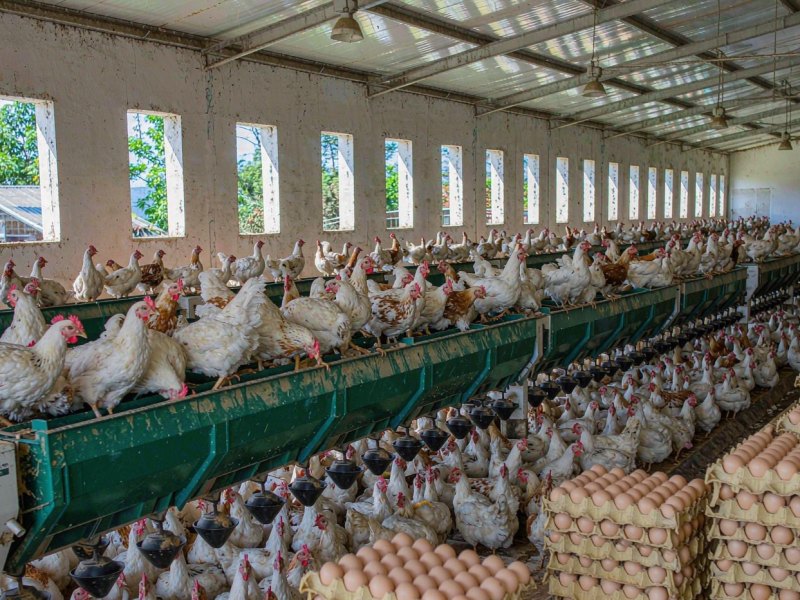
Poultry feed prices in south-western Nigeria have fallen sharply. A market survey in Ondo State, reported by Leadership newspaper, found that several popular feed brands, including Ultima, Chikun, Vital and Hope Feeds, dropped from about 22,500 naira to around 15,500 naira per bag, a cut of roughly 31 per cent. On paper, eggs should follow within weeks. They have not: a crate of 30 eggs still sells for around 4,000 naira at the farm gate, and more at retail.
The reasons farmers give are worth understanding, because the same lag plays out in every West African market after every grain harvest. Feed dealer Omolayo Fagbemi points out that the drop is recent. Farmers spent the previous three months buying feed at peak prices, and many are still recovering those losses. Cutting egg prices immediately, she argues, would leave producers unable to recover their investment.
Adedoye Adedolapo, poultry manager at Nibanola Farms in Ondo, adds a second layer: feed is no longer the only cost that matters. His farm mixes its own feed from maize, oats and other raw materials at about 12,800 naira per bag, cheaper than any commercial brand, yet eggs have not moved. Transport and fuel, he says, keep retail prices high because retailers add their own operating costs on top of the farm-gate price.
There is a third factor feed prices cannot touch: the calendar. With Christmas and New Year approaching, dealers report that some layer farmers are shifting birds or management attention towards broilers for the festive market. Fewer hens in lay means less egg supply in the weeks when demand peaks, which keeps prices up even as input costs fall.
For a feed buyer, the most interesting number in the story is the 12,800 naira bag. A farm that mixes its own feed from purchased raw materials is producing for far less than the very brands that just cut their prices. That gap is the premix and processing margin, and it is why on-farm mixing, backed by a reliable premix, keeps spreading across Nigerian poultry belts.
The price lag also carries a planning lesson. When feed prices fall after harvest, the gain reaches the consumer slowly, but the window for the farmer is immediate: feed bought now is cheaper than feed bought in December. Every kilogram of maize and soybean meal locked in before the festive peak, or stored properly on farm, shields the operation from the next swing. The same logic applies to anyone fattening rams for the Eid markets.
What should a buyer do with this news? Three things. First, check your own feed prices weekly against the brands cited, because the Ondo figures will not hold everywhere. Second, if you buy finished feed, ask suppliers for a price valid through the festive season before everyone shifts to broiler volumes. Third, if you have storage or a mixer, price raw materials now, since they firm up before finished feed prices do.
Feed getting cheaper is genuinely good news for Nigerian poultry, and it usually signals a decent maize harvest moving through the market. But the egg price a consumer pays is built from the last three months of costs, transport margins and seasonal demand, not from this week's feed bill. Farms that understand that lag, and act on raw materials while everyone else watches retail prices, are the ones that keep the margin. Jinmao Biotech supports feed millers and poultry farms across West Africa with vitamin and mineral premixes for on-farm mixing, and we are glad to discuss formulations built around your local grain on WhatsApp.