
Nigeria has spent two years writing feed policy. On Monday 19 October 2026, at a three-day stakeholders workshop in Abuja, the Federal Ministry of Livestock Development started the harder part: drafting the framework that turns the National Feed and Fodder Policy into work that states can budget for. For anyone selling premix, concentrate or raw materials into the region, the content of that framework matters more than the announcement. This is what Nigeria's feed and fodder policy means for feed buyers in practice.
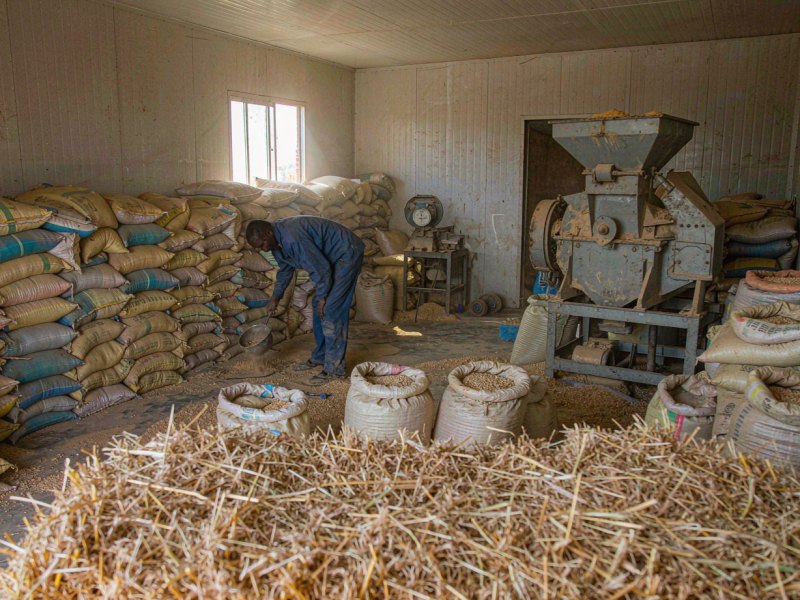
Minister of Livestock Development Idi Mukhtar Maiha put the cost share at about 70 percent of total livestock production costs, which is the figure that explains the urgency. He described the shift the policy is aiming at, from unmanaged natural grazing to what he called an organised, commercially viable and climate-resilient feed and fodder system, and pointed to crop by-products, rice straw in particular, in the rice-producing communities of Kebbi, Niger, Jigawa and Benue.
The workshop, according to Dr Hakeem Ibilade, Director of Ranch and Pastoral Resources Development, is meant to produce four documents: a national implementation framework, a roles and responsibilities matrix, a resource mobilisation strategy, and a monitoring and evaluation framework. Read together, those four are a procurement signal. The roles matrix tells suppliers which agency or state buys what. The resource strategy tells them where the money is expected to come from. The monitoring framework is the beginning of written specifications, and written specifications are what a serious additive supplier wants, because a document replaces a verbal argument about quality.
The rollout is already assigned. All 29 states covered by the Livestock Productivity and Resilience Support Project are to build the framework into their annual work plans, which moves feed and fodder activity from one-off programmes into budget lines. Community storage and early-warning systems for feed shortages were also discussed, and both create demand for something more basic than additives: bagged, graded, stored material with a known moisture and aflatoxin level.
Rice straw is the interesting part for formulators. It is cheap and abundant in the four states named, low in protein, high in silica and often mouldy if it sat in the field. Used properly it is a fibre source that lets a miller hold a ration together when hay is scarce. Used carelessly it drags intake and digestibility down and pushes the farmer to buy more concentrate to compensate. That is why a premix specification for a straw-based ration is not the same as one for a hay-based ration, and why buyers should ask for the roughage base before comparing prices.
Protein and by-products are moving the same way. A Mastercard Foundation-backed programme involving Christian Aid, Sahel Consulting, ILRI and Amo Farms is helping young women process cassava peel into a feed ingredient. On capacity, Olam Agri opened a 50 million dollar soybean crushing plant and feed mill in Ilorin in April and is now planning a feed plant in Delta State.
Poultry buyers are watching the same calendar from another angle. Feed accounts for about 75 percent of poultry production costs according to Dr Olalekan Odunsi, chairman of the Nigerian Poultry Show, which runs in Abeokuta from 3 to 5 November. A policy framework takes years to move a price. A specification, by contrast, can be checked on delivery, this week.
If you supply feed or buy premix in the region and want a specification sheet built around a straw-based ration, our technical team can prepare one against the ingredients you actually use. Message us on WhatsApp with your roughage and energy sources and we will reply with a starting formula.