
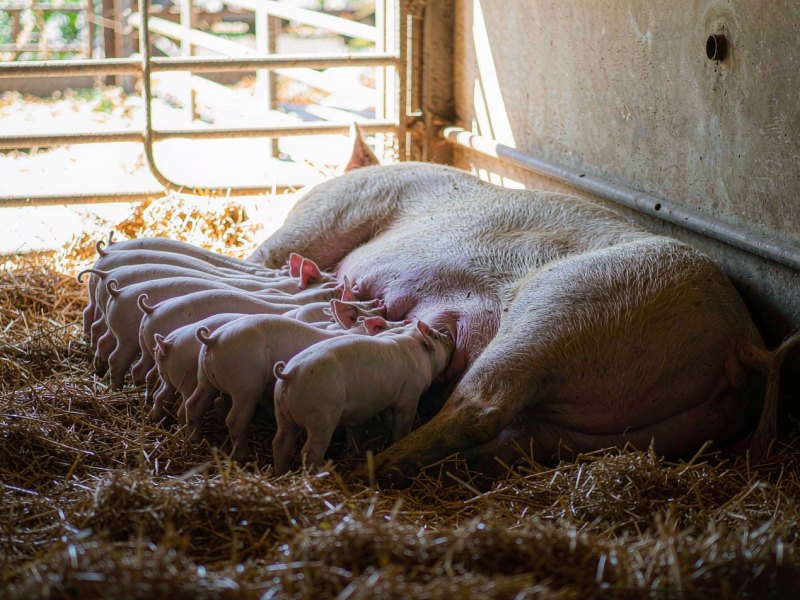
On most pig farms in West Africa, the difference between a profitable batch and a break-even batch is decided in the farrowing crate. A sow that eats well and milks well weans heavy, uniform piglets that reach market weight faster. A sow that goes off feed during the first week after farrowing loses body condition, produces less milk and drags the whole batch down with her. Lactating sow nutrition is one of the pillars that decide whether the farm makes money.
Why lactation is the most demanding phase
A modern sow weaning ten to twelve piglets produces eight to twelve litres of milk a day at peak lactation, drawn from the feed she eats and her own body reserves. Piglets grow almost entirely on milk for the first three weeks, so every litre converts directly into weaning weight. When a sow cannot eat enough, she mobilises fat and muscle, and the cost appears later as a delayed return to oestrus, smaller litters and a shorter productive life.
Feed intake is the number that decides everything
The most useful habit on a pig unit is to record how much each lactating sow actually eats. A working guide is one kilogram of feed on the day of farrowing, then a steady increase of about half a kilogram a day until the sow is eating freely, aiming for two kilograms plus roughly half a kilogram per piglet suckled. In hot West African conditions intake rarely reaches these figures on its own, so every barrier you remove is money. Offer feed two or three times a day in the cool hours, keep the trough clean and never let a sow smell stale or mouldy feed, because one bad smell can cut intake for days. Energy and protein must also be dense, since a sow with a limited appetite can only meet her needs if every kilogram of feed delivers more nutrients.
Minerals, vitamins and gut comfort
Milk is rich in calcium, phosphorus, zinc and the B vitamins, and a sow that cannot draw enough from her diet will draw them from her own bones. A balanced sow premix guarantees the daily supply of calcium, available phosphorus, trace minerals and vitamins A, D, E and the B group. Organic acids, probiotics and a source of fibre such as wheat bran support digestion and reduce constipation, a quiet but common cause of low feed intake in crated sows.
Water and heat are the hidden limiters
A lactating sow can drink thirty to forty litres of water a day, and restricted or warm water cuts milk production before it cuts feed intake, so check flow rates daily and keep the drinkers clean. Above about twenty-five degrees the sow spends energy on cooling instead of milking, so shade, ventilation and drip cooling belong to the feeding plan as much as the ration itself.
Frequently Asked Questions
How much feed should a lactating sow receive per day?
A practical guide is two kilograms plus about half a kilogram per piglet suckled. In hot climates, reach this level as fast as the sow accepts it and never let intake fall below maintenance.
Why does my sow lose weight while nursing piglets?
Weight loss means energy intake is below milk output. The usual causes are low feed intake, low nutrient density, warm drinking water or heat stress. Recording daily intake per sow is the fastest way to find the problem.
Jinmao Biotech supplies lactating and gestating sow premixes and feed additives for pig farms across West Africa. For formulation advice or a quotation, message our team on WhatsApp.