Feed availability in the dry season remains one of the biggest limits on livestock productivity in northern Nigeria, and Kaduna State has just put year-round feed production at the centre of its answer. At the state-level close-out event of the Advancing Local Dairy Development in Nigeria programme, known as ALDDN, held in Zaria, the Kaduna State Government said it would carry the gains of the programme forward by integrating them into its livestock development framework, with livestock feed production identified as a key strategy.
What the programme achieved
ALDDN was a five-year programme funded by the Gates Foundation and implemented by Sahel Consulting Agriculture and Nutrition in partnership with state governments and dairy processors. It was designed to reach fifteen thousand dairy households and one hundred and twenty thousand beneficiaries across seven states, namely Kano, Kaduna, Jigawa, Plateau, Bauchi, Adamawa and Taraba, and it built on the earlier Nigerian Dairy Development Programme. Along the way it supported smallholder dairy farmers with technical assistance, better access to inputs, financial inclusion for women dairy farmers and practical infrastructure such as solar-powered boreholes, milk cans, collection points, milking parlours and milk evacuation vehicles.
From a programme to a permanent system
Speaking at the close-out, Dr Ibrahim Yusuf, Managing Director of the Kaduna Ranch Development Company, explained that year-round availability of quality feed remains a major constraint on livestock production, and that the state intends to solve it by revitalising grazing reserves and improving pasture development. The company is already developing the six-hundred-hectare Damau Grazing Reserve in Kubau Local Government Area, and one hundred and ten hectares have been started for the production of high-quality livestock feed. The work sits inside a wider sustainability framework that also involves collaboration with the Livestock Productivity and Resilience Support Project, known as L-PRES, and the National Animal Production Research Institute, NAPRI. The Commissioner for Agriculture, Alhaji Murtala Mohammed-Dabo, represented at the event by the Director of Livestock Services, Mr Amwe Akos, added that some successful interventions have already been captured in the state's proposed 2027 budget.
Why the feed gap matters
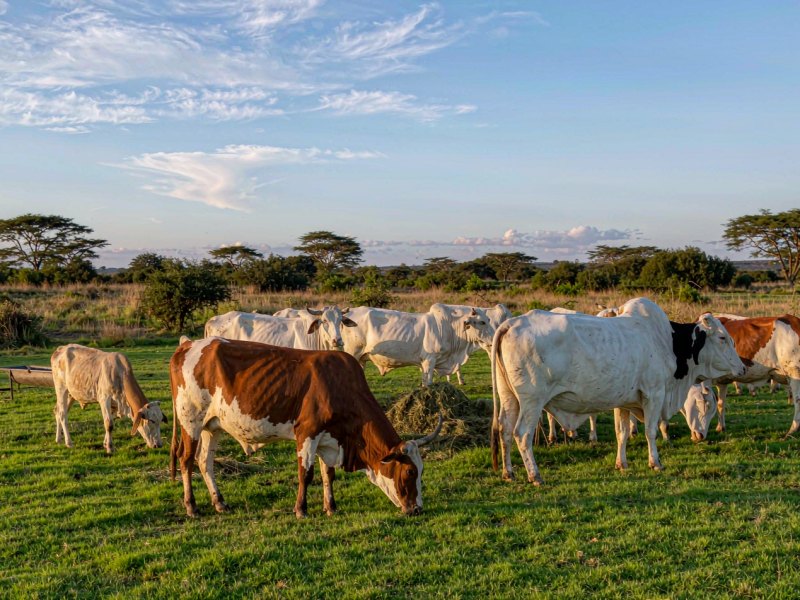
For dairy and beef farmers, the dry-season feed gap is a familiar story. Natural pasture loses both quantity and quality once the rains end, animals lose weight exactly when prices are often best, and milk yield falls on farms without stored forage. A grazing reserve developed for cultivated pasture changes that picture, because conserved forage and supplementary feed carry the herd through the lean months. The same logic applies on every farm, whatever its size: animal performance follows feed supply, and feed supply must be planned, not hoped for.
What it means for the industry
Initiatives like this signal growing public investment in ruminant nutrition, and they widen the market for quality feed inputs, mineral premixes and additives that help animals convert forage efficiently. For feed buyers and suppliers watching Nigeria's livestock sector, the direction is clear: more cultivated feed, better planning and rising expectations on quality. If your farm or feed business is working on dairy or beef nutrition, our team supplies premixes and additives for cattle across West Africa and is glad to discuss your formulation needs. You can reach us directly on WhatsApp.