
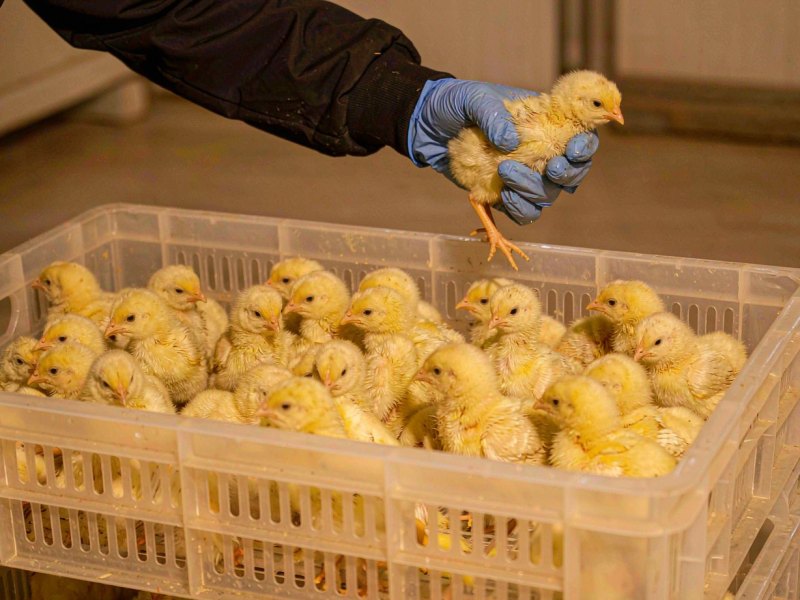
Nigerian poultry farmers have spent months asking where the next chick will come from. On October 23, Jigawa State signed a memorandum of understanding with India's Srinivasa Farms to build a ten million dollar day-old chick hatchery as a joint venture, with the Indian company holding 60 percent and the state 40. The project follows talks that started in 2025 and a delegation the Indian company sent to Jigawa in April 2026.
The deal matters because of what farmers have been paying. Industry operators told AgroNigeria on October 17 that day-old chicks now sell for 1,800 to 2,100 naira, about 1.33 to 1.56 dollars, up from 1,300 to 1,500 naira two to three months earlier. In Kano, farmer Aminu Nabegu told the News Agency of Nigeria his chicks had climbed from 500 to 700 naira to about 2,000. Retail listings show ISA Brown pullet cartons from the major hatcheries at 175,000 to 185,000 naira. For a farmer placing 2,000 birds, that is roughly four million naira in chicks alone before the first bag of feed.
Why are day-old chicks so expensive in Nigeria? The shortage has structural roots. Adeoluwa Adeshola of Arzikin Noma Africa blames limited parent stock capacity, which is concentrated among a small number of companies. The Federal Ministry of Livestock Development acknowledged in June that some operators do not fully use their allocated import quotas. Geography adds the rest. Jigawa's livestock commissioner Salim Abdurrahman Lawal told The Punch that chicks reaching northern farms travel 1,200 to 1,500 kilometres from southern hatcheries, and that the journey weakens the birds and their response to feeding.
The consequences are visible. Some farmers have cut flocks, one producer halving his usual 150 to 200 birds. Poultry meat output still grew 7.8 percent between 2020 and 2024 to nearly 343,000 tonnes according to FAO data, but the sector keeps hitting the same ceiling, not enough breeding stock to supply it.
What should hatcheries and their input suppliers take from this? First, capacity is coming, but slowly. The partners have not disclosed annual output or a commissioning date, so nobody should plan around Jigawa chicks next quarter. Second, location is the quiet advantage. A hatchery inside the north cuts transport stress, and chicks that arrive strong convert starter feed better in the first week, which is exactly where later performance is decided.
For feed and premix suppliers, chick supply sits at the top of the funnel. Where chicks flow, feed demand follows within weeks, and a new hatchery with its technical support programme brings hundreds of small farms into regular contact with an input source. That is a distribution opportunity for anyone selling starter feed, vitamins and mineral premixes in the northwest.
Buyers should also read the price signal correctly. Expensive chicks change the economics of the brooding phase, and a farmer paying 2,000 naira per pullet cannot afford starter feed that underperforms. Expect more attention on early nutrition quality, coccidiosis control and gut health support, because the chick has become too costly an asset to waste on a weak start.
Between now and commissioning, the market will stay tight and festive-season demand will keep pressure on prices. Farms that lock chick orders early, protect brooding conditions and feed for early gut development will keep the edge over those waiting for relief that the Jigawa hatchery cannot deliver yet.
Jinmao Biotech supplies poultry premixes and gut health additives for tropical farms. If rising chick prices are squeezing your margins, message us on WhatsApp for a starter programme that protects the birds you paid for.