
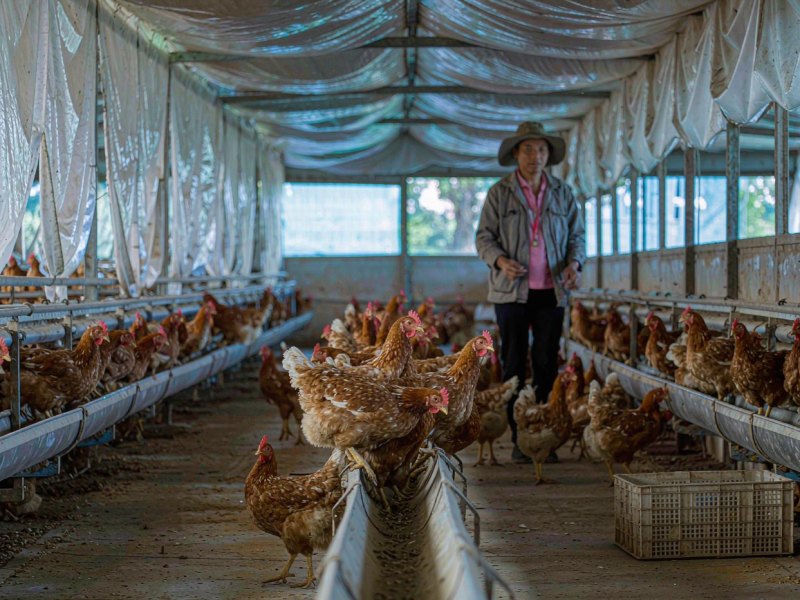
Replacing a layer flock is one of the biggest recurring costs on an egg farm. Point-of-lay pullets absorb cash months before they lay an egg, and in several West African markets chick and pullet prices have risen faster than egg prices. That is why induced molting, resting the flock deliberately to restart a second laying cycle, is still a practical tool for farms that cannot always source quality pullets on time. Farmers asking how to induce molting in laying hens with a feeding program discover quickly that preparation matters more than any single trick.
Start with selection and health. Remove poor producers and thin or sick birds before the program begins. Treat for worms and external parasites and give a Newcastle disease booster during the rest period, because these tasks are hard to fit around peak lay. Weigh 50 to 100 birds at random and record the average, since the whole program is steered against that number. A flock already below about 50 per cent production rarely earns back the weeks of rest.
The classic method uses feed withdrawal. Lights go down to about 8 hours a day, feed is removed while water stays available, and body weight falls steadily. Depending on breed and weight, withdrawal lasts four to seven days, up to ten for heavy hens. Weigh a sample every two or three days and stop the withdrawal once birds have lost 25 to 30 per cent of starting weight. Going beyond that target pushes mortality up and delays recovery. In the hot season, run the program only with good shade and ventilation, and never withdraw water.
Many farms now prefer non-fasting programs. A low-nutrient diet such as cracked maize diluted with wheat bran or rice hulls, offered freely, achieves the same weight loss with less stress and lower mortality. High-zinc molt diets exist but demand precise sourcing and should not be improvised on farm. Whatever the method, hold lighting at 8 to 10 hours through the rest, then add 30 minutes each week until birds receive about 16 hours as production returns.
Refeeding decides the outcome. Start birds on a buildup ration based on maize with roughly 16 per cent protein, and keep dietary calcium low, around one to two per cent, until production passes about 5 per cent lay. Only then move to a full layer ration with 3.5 to 4 per cent calcium. Expect the first eggs from week four to six, a second-cycle peak of 55 to 65 per cent production in a good flock, and 150 to 250 additional eggs per hen housed.
Molting is a bridge, not a substitute for good rearing. Compare the cost of several weeks of rest and lower output against the local price of pullets, and decide flock by flock. A well-run second cycle also delivers stronger eggshells early on, which helps in markets where cracked eggs are discounted hard. Jinmao Biotech supplies premixes for buildup and second-cycle layer rations, and our team is glad to help you plan one on WhatsApp.