
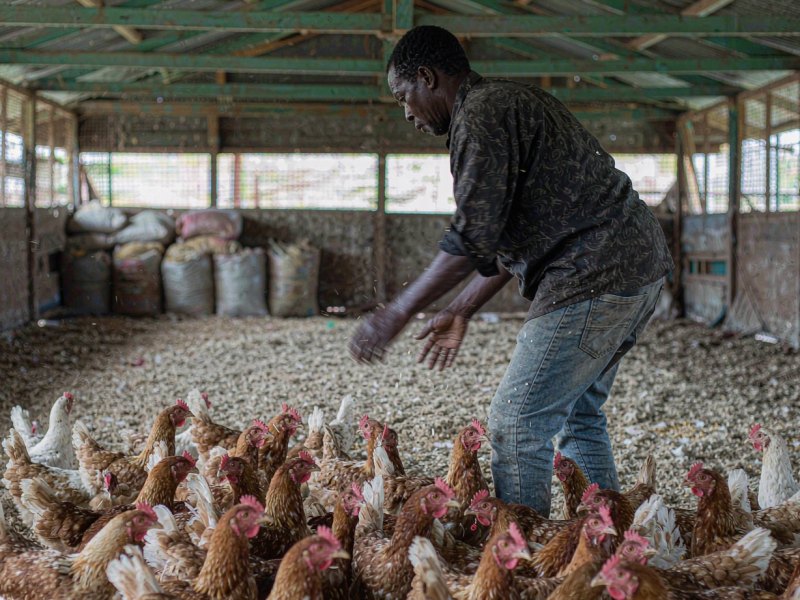
Nigeria's poultry sector often talks about the big integrated farms, but the majority of the country's eggs and chicken come from thousands of smallholder farmers. That is precisely the group a programme called PoS-DerP has been working on, and its second edition was recently launched in Abuja by Heifer International. For anyone asking how smallholder poultry farmers in Nigeria can get support, it is one of the clearest answers available.
The Poultry Supply Chain De-risking Programme, known as PoS-DerP, held its second-edition launch in Abuja under the theme of navigating the future of the sector. According to the country director of Heifer International, Dr Lekan Tobe, the first edition equipped more than 7,000 smallholder poultry farmers across Kaduna and Nasarawa states with tools, training and resources to build sustainable businesses. He warned that Nigeria risks losing about 250 billion naira from the poultry subsector if its key challenges are not addressed.
Those challenges are well known to anyone who buys or sells feed. At the same event, Gbenga Ariyo, technical lead at Kore International, listed feed production, access to finance and access to veterinary services as the main constraints on smallholder poultry production. The Federal Ministry of Agriculture and Food Security, represented by Maimuna Mustapha-Yahuza, said the ministry is partnering with Heifer Nigeria to address funding gaps and to promote climate resilience among poultry farmers.
Technology partners are scaling up as well. Opeoluwa Fayomi, co-founder of Pullus Africa, said the programme currently reaches about 8,500 farmers in Kaduna and Nasarawa and is preparing to expand into Abuja, with a goal of 20,000 farmers by June next year. Beneficiaries of the first edition reported better access to markets and to funds.
For feed and premix suppliers, programmes like this change who the customer is. A smallholder who sells a few crates of eggs a week buys a bag of feed when cash allows. But a network of 8,500 trained farmers, organised by one programme with inputs and technical support, behaves much more like a mid-size commercial buyer. Suppliers who wait for these farmers to grow one by one will be late. The smarter route is to engage the programmes and cooperatives themselves, with group pricing, small pack sizes and clear technical documents.
The finance gap matters too. When the constraint on a farm is cash rather than the price per tonne, packaging and payment terms decide whether your product moves. A 25 kg bag of a complete premix may be impossible for a farmer with 200 birds, while a smaller pack that covers one month of mixing sells immediately. Flexible terms are not a discount on quality, they are a route into a market segment that keeps growing despite the cost pressures documented across the sector this year.
The message from Abuja is that the smallholder segment is being organised, trained and connected to finance, whether or not individual suppliers pay attention. Feed companies that show up early, with the right pack sizes and honest technical advice, will be the ones these farmers call when their flocks and their budgets grow.
Jinmao Biotech manufactures vitamin and mineral premixes for poultry feeds, with formulations and pack sizes suited to smallholder and commercial farms across West Africa. Contact our team on WhatsApp to discuss supply for your market.