
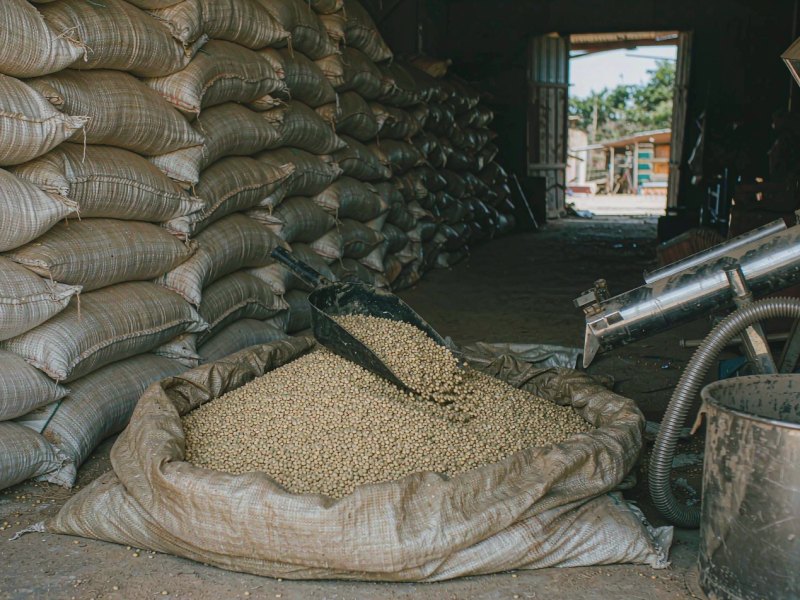
Ghana has stopped the export of raw soybeans, and the effect on local prices has been immediate. Speaking on Channel One TV on 10 November 2026, Dr Peter Boamah Otokunor, Director of Presidential Initiatives in Agriculture and Agribusiness, said a bag of soybean that cost about 800 cedis in 2024 now trades at around 350 cedis. The stated aim is to keep the bean in the country for crushing into oil and soybean meal, so that the poultry and livestock sector buys meal instead of exporting value and importing it back at a premium.
For feed buyers the direction is welcome. Soybean meal is the most expensive protein source in West African poultry and pig diets, and a fall of that size in the raw bean eventually reaches the meal price. The difficulty is timing and quality rather than direction.
Timing first. A ban changes prices in a week, but crushing capacity does not appear in a week. Until local crushers run consistently, part of the crop is held, and meal may still be imported or bought from the few plants already operating. Expect a lag of one to two quarters before the cheaper bean is fully reflected in delivered meal cost, and expect the first batches from any new plant to vary.
That is why the first thing to agree with a new supplier is not the price but the specification sheet per batch. Ask for crude protein between 44 and 48 percent on a dry matter basis, moisture at or below 12 percent, and a urease activity test. Urease tells you whether the bean was properly toasted. Under-processed meal carries active trypsin inhibitor and depresses performance in young birds, while over-heated meal loses available lysine even though the crude protein figure still looks correct.
Aflatoxin is the second check. Surveys of Ghanaian poultry feed have repeatedly found samples above the 15 parts per billion threshold used by the Ghana Standards Authority, and locally crushed beans stored in humid conditions carry the same risk. Require a mycotoxin panel with each delivery, sample every truck, and keep a binder in the premix where contamination is a known risk.
Then review the formula rather than simply adding more meal. Cheaper meal tempts formulators to push inclusion to thirty percent and cut the expensive ingredients. In layer diets, keep soybean meal at a level the amino acid balance supports, and use synthetic lysine, methionine and threonine to hold performance instead of oversupplying crude protein. In broiler diets, watch the energy side, because maize, not meal, still sets the cost of a kilogram of gain.
Finally, plan for the reversal. A bean price of 350 cedis cuts farm income, and the National Seed Trade Association of Ghana has already asked government to lift the restriction, arguing that farmers cannot find buyers. Add the strong El Nino pattern that the Ghana Meteorological Agency expects from November 2026 to April 2027, with hotter and drier conditions in the northern growing zones, and the risk of a tighter 2027 crop is real. Buyers who cover part of their meal requirement forward, and keep two suppliers, will not be caught.
Cheap ingredients only pay when the rest of the formula still holds. Jinmao Bio poultry and pig premixes are formulated to keep trace minerals, vitamins and amino acid support stable when ingredient quality moves. Send us your current formula and the latest meal analysis on WhatsApp and we will review it with you.