
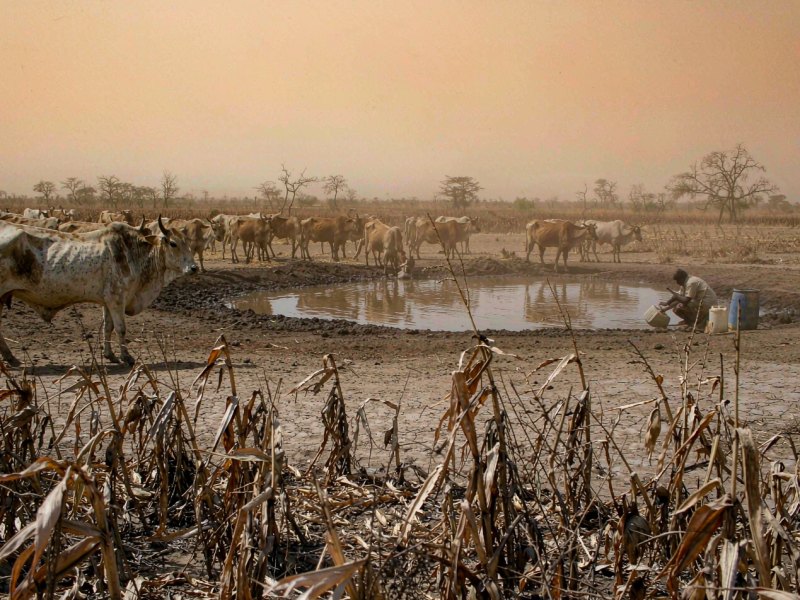
The Ghana Meteorological Agency (GMet) has issued a stark warning for the months ahead. In an advisory released on October 30, based on data from the United States National Oceanic and Atmospheric Administration, the World Meteorological Organization and the International Research Institute for Climate and Society, GMet reported a 96 percent probability that the developing El Nino reaches very strong intensity between November 2026 and January 2027. The event was confirmed in June 2026 and has continued to intensify since.
What the forecast means for farms
GMet expects a hotter, drier and dustier dry season from late November 2026, with below-normal rainfall across most of the country between October and December. The hardest stretch should come between February and April 2027, when heat stress peaks in northern Ghana. Forecast temperatures cited in the advisory reached 38 degrees Celsius in Bolgatanga and 36 degrees in Tamale. The agency also flagged water shortages, dust, bushfires and added pressure on crops and livestock as the season advances.
Why feed prices are the hidden shock
For livestock keepers, the direct threat is grass. When natural pasture dries weeks earlier than usual, cattle, sheep and goat herders turn to purchased feed much sooner, and demand pushes prices up across the board. The 2024 dry spell showed the scale of the risk: national grain harvests dropped by nearly 11 percent and rice harvests by more than 21 percent, and almost nine in ten affected farmers said they received no outside help to recover. Irrigation offers little buffer in Ghana, since only about 2 percent of irrigable farmland has working systems, and nearly nine out of ten irrigated farms depend on small private pumps that become expensive to run when water tables fall.
What government and partners are doing
The Food and Agriculture Organization and local partners launched an early-warning drive on November 11, 2026, to move support to northern communities before the worst heat arrives. At the launch of the government's REWARD program in Tamale, Minister of Agriculture Eric Opoku announced plans to buy surplus rice and maize from this year's glut and store them as a buffer against El Nino impacts. GMet has also called for a national task force to distribute fast-growing, drought-tolerant seeds and set up emergency animal feed banks across the north.
Four actions for feed buyers before February
- Price now, not in February. Maize from the current harvest is at its cheapest point of the year. Locking volumes with suppliers today protects against the dry-season spike.
- Store correctly. Grain held against price rises must stay below about 13 percent moisture, off the floor and protected through the damp harmattan-to-rains transition.
- Plan livestock marketing. Finishing and selling lambs, rams or cattle before the February-to-April heat cuts total feed demand at exactly the moment concentrate prices peak.
- Follow official announcements. FAO advisories, ministry notices and any feed bank rollouts will shape local prices, and early movers buy better.
Feed is the biggest line in any livestock budget, and a very strong El Nino makes every kilogram count. Jinmao Biotech supplies premixes and feed additives that help West African farms get the most from locally available ingredients, and our team can advise on rations for the dry season ahead. Contact us on WhatsApp to discuss your formulation.