
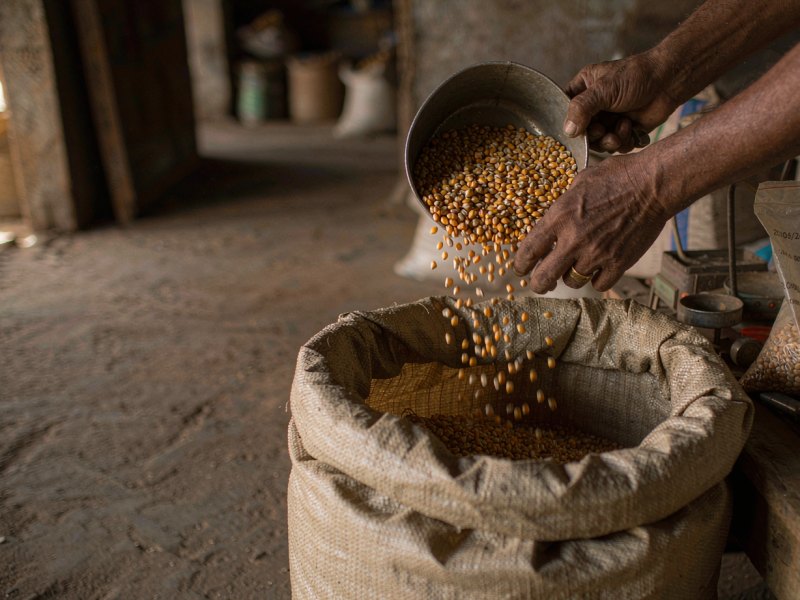
Every tonne of maize or soybean meal that arrives at a farm gate or a feed mill carries a quiet risk. The price is agreed on weight, but the value is decided by moisture, purity and how the ingredient was processed. A two point difference in moisture on a ten tonne load is two hundred kilos of water bought at grain prices, and it decides whether the stack heats up three weeks later.
Start with sampling, not with the invoice. Walk the load, open every tenth bag, then take probe cores from ten to twenty points across the truck. Mix the cores in a clean bucket, quarter them down to about one kilo, split that into two bags, and keep one sealed and labelled for thirty days. If a problem appears later, that sample is the only evidence you will have.
Moisture is the first number to check. For maize, 13.5 percent is a sensible ceiling in West African conditions, and anything above 14 percent should be rejected or renegotiated. A handheld moisture meter pays for itself on one delivery. Without a meter, the salt jar method still works for a field decision. Fill a dry jar two thirds with grain, add a spoon of dry salt, seal, shake, and look for salt sticking to the glass after twenty minutes.
Then look at what else is in the bag. Broken kernels and dust mean handling damage and faster spoilage. Sand, stones and husks mean you are paying for weight that feeds nothing. Fine webbing, small holes and a sweet dusty smell mean insects. A musty or sour smell is the clearest warning of mould, and greenish or blackened kernel tips point to Aspergillus infection rather than simple staining.
Visible mould only catches part of the aflatoxin problem, because contamination is patchy. Rapid test strips are cheap now and belong in every maize intake. The widely used reference limit for total aflatoxin in animal feed is 20 parts per billion, and dairy feeds are held to a stricter figure because of carryover into milk. If a load fails, do not blend it down quietly. Quiet blending is how an acute problem becomes a chronic one.
Soybean meal needs a different check. Protein should sit at 46 to 48 percent for the high protein grade, with crude fibre below seven percent. High fibre means hulls were left in. The urease test shows whether the meal was toasted properly. A pH rise of 0.05 to 0.20 means good processing, above 0.30 means under processing and active trypsin inhibitors that hurt young birds, and almost no rise means over processing and damaged lysine. Shaking a sample in water in a glass jar will also show grit settling at the bottom.
Storage decides whether all that checking was worth anything. Stack bags on pallets ten to fifteen centimetres off the floor and half a metre from walls, no more than eight to ten bags high in tropical heat. Work first in, first out, and never mix old and new stock in one stack. Premixes and mineral packs need their own corner, cool, dark and sealed, used within four to six weeks of opening and never stored beside urea or salt.
None of this needs a laboratory. It needs a written specification, a probe, a moisture meter, test strips and a logbook your supplier knows you keep. Suppliers deliver differently to buyers who measure.
Jinmao Biotech supplies premixes and feed additives to farms and feed mills across West Africa. If you would like our one page intake checklist for your receiving team, message us on WhatsApp.