
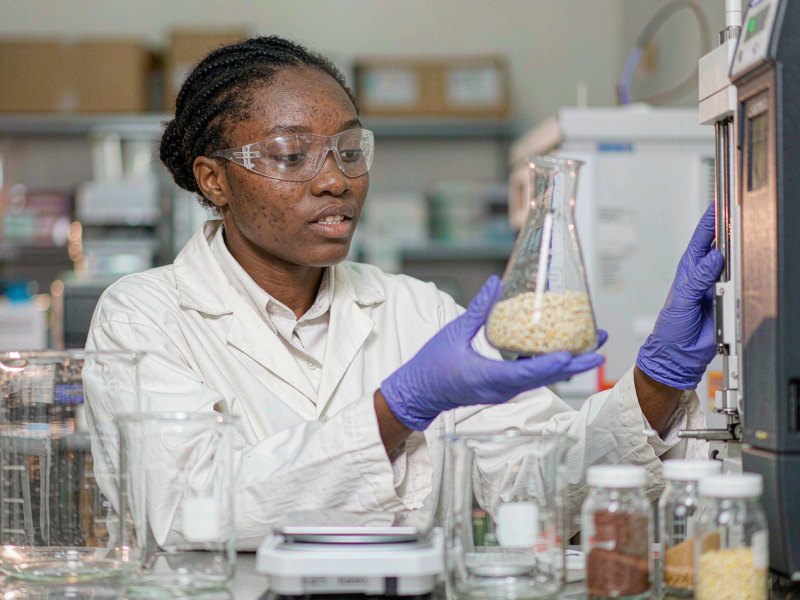
At the annual meeting between FAO and the International Feed Industry Federation in Rome on 12 November, the Food and Agriculture Organization announced its first ever Animal Nutrition and Feed Reference Centre. The centre will be hosted by the Feed Research Institute of the Chinese Academy of Agricultural Sciences in Beijing, and FAO Deputy Director-General Godfrey Magwenzi handed over the designation at the meeting. The step follows a plan announced in October 2025 to build a global network of feed reference centres, with a worldwide selection process that started in March 2026.
A reference centre is not a regulator and not a certification body. It is an institution that FAO can call on for independent science, policy advice, training, standard methods and laboratory expertise. China is the world's largest industrial feed producer with about 342 million tonnes of output in 2025, close to a quarter of global production, and the new centre will focus on feed resource development and safety evaluation, quality and risk control, low-carbon production, regulatory science and international training. What matters for farms far from Beijing is the training part, because African laboratories and feed technicians are part of the intended audience.
For a feed buyer in Lagos, Accra, Abidjan or Dakar, the honest answer is that nothing changes tomorrow. Prices will not move, duties will not change, and no new rule lands on your desk this quarter. The change is directional. Over the next few years, reference methods for testing aflatoxins, amino acids and vitamin potency should converge, and more training slots for laboratories in developing countries should appear through FAO programmes. When regional labs adopt better methods, the numbers on a certificate of analysis become more comparable between suppliers and countries, which slowly narrows the space where bad feed hides.
You do not have to wait for that convergence. Four checks protect you today. First, ask every supplier for a certificate of analysis that names the test method, not just a result. An aflatoxin number measured by HPLC is worth more than one measured by a cheap screening kit, and a vitamin guarantee should state whether it refers to fresh production or the end of shelf life. Second, compare mycotoxin results against the limits used in your market, and reject lot numbers without them. Third, store premix correctly and buy sizes you finish within three months, because most disputes in hot climates are storage losses, not factory faults. Fourth, keep copies of every certificate by batch, so that when a problem appears you can show exactly what you bought and when.
Standards in the feed trade are tightening, slowly and unevenly, but in one direction. Buyers who already demand named methods, batch certificates and clear labels will find the transition painless, and will be first in line when regional training and testing capacity improves. If you want a second opinion on your premix and additive quality documentation, our team reviews supplier certificates with buyers every week. Contact us on WhatsApp and send your latest certificate for a practical review.