
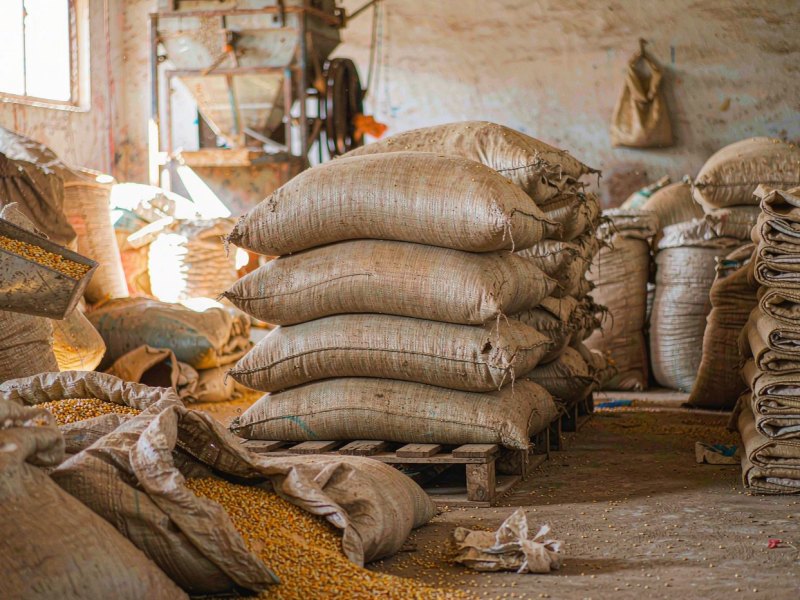
On 6 November the UN Food and Agriculture Organization published its October price index. The food index averaged 133.9 points, down 1.2 per cent from September although still 5.9 per cent above October 2025. The cereal sub-index did most of the movement: 116.8 points, a fall of 5.5 points or 4.5 per cent in one month, and 12.6 per cent below a year earlier. International maize quotations came off the three-year high they touched in September, and wheat declined for the first time after four consecutive monthly gains.
That is a world price, quoted in dollars, for grain loaded at an export terminal. What a feed mill in Kano, Kumasi or Bouaké pays is a different number, and four gaps sit between the two. The first is freight and port handling, which do not follow the Chicago board. The second is the exchange rate, which over the past two years has moved far more than the grain market itself. The third is the local harvest, because most West African mills buy domestic maize rather than Black Sea maize. The fourth is trade volume: FAO expects world cereal trade in 2026/27 to fall 3.3 per cent to 507.7 million tonnes, with wheat trade down 8.6 per cent, and a thinner flow means fewer offers, wider spreads and slower transmission of any price fall.
The supply picture behind the decline is genuinely comfortable. FAO estimates 2026 world cereal production at 2.999 billion tonnes, a retreat from last year's record but still the second largest crop ever recorded. Rice moved the other way, up 1.6 per cent, because harvest delays in several exporting countries tightened nearby supply. Sugar rose 6.6 per cent in the month and 28.8 per cent year on year, which reaches feed only indirectly, through molasses and transport costs.
What the index does not price is the next season. FAO's crop prospects report notes that 41 countries still need external food assistance, 31 of them in Africa, and that a strong El Niño is expected to keep disrupting agricultural production into 2027. In practice the downside in maize is a harvest-window story, while the upside remains a weather story that is not resolved. Buyers who read a single month of index data as a trend are usually the ones caught out in the second half of the season.
Three practical conclusions follow for West African buyers. First, do not rebuild a formulation on one month of index movement. A 4.5 per cent fall in the cereal index becomes a much smaller change on a bag of finished feed, because cereals are only part of the formula while premix, amino acids, oil and bags are priced in dollars or imported. Second, buy maize at the peak of your own harvest, which is the only discount a local mill can actually capture. Third, keep a substitution window open: where sorghum or cassava is available at a good price, holding 5 to 10 per cent of the formula flexible protects you when maize rallies.
Watch the December index as well, since it is the last reading before the first-quarter buying season. If you are tendering for premix or concentrate for the coming quarter, our team can quote against your current formulation and advise which part of the formula to cover now and which to leave open, on WhatsApp.