
Dry-Season Feeding for Sheep and Goats: 5 Ways to Get More from Low-Quality Forage
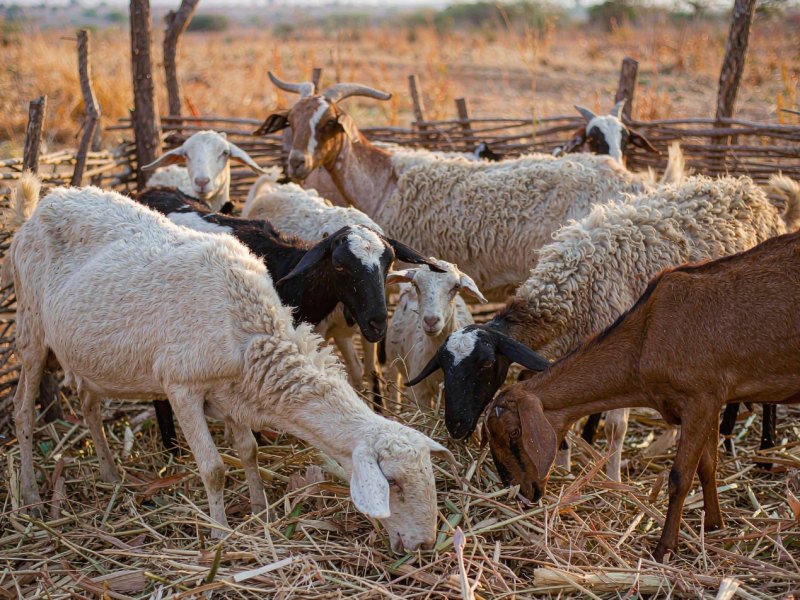
Across the Sahel and the northern savanna zones of West Africa, the dry season is the hardest time of the year for small ruminants. Natural pasture turns brown and fibrous, crude protein in standing forage can fall below 5%, and animals that looked strong in October are often thin by February. A structured dry-season feeding plan keeps weight on your sheep and goats — and gets lambs and kids to market size at the right moment.
1. Upgrade your roughage before buying concentrate
Crop residues such as millet and maize stover, groundnut haulms and rice straw are the base of dry-season rations. Chop them to 3–5 cm so animals waste less and eat more, and treat cereal straw with urea (a 4–5% urea solution, well sealed for 2–3 weeks) to raise its nitrogen content and digestibility. Well-treated straw can replace a meaningful part of more expensive feed.
2. Give a protein supplement every day
Rumen microbes need protein to digest fibrous feed. When crude protein in the ration falls below about 7%, digestion slows and intake drops. A daily supplement of 150–300 g per head of a balanced concentrate — cottonseed cake, groundnut cake or a commercial mix — keeps rumen function working. Feed it in the early morning or evening so even low-ranking animals get their share.
3. Balance minerals and vitamins — salt alone is not enough
A plain salt block supplies sodium but almost nothing else. During the dry season, deficiencies in phosphorus, calcium, zinc, selenium and vitamin A show up as poor appetite, weak bones, dull coats and low fertility. A complete sheep and goat premix mixed into the supplement at the recommended rate corrects these gaps. For sheep, always check the copper level: sheep tolerate far less copper than goats.
4. Separate the flock into feeding groups
Pregnant and lactating ewes and does, growing lambs and kids, and fattening animals have very different needs. One ration for everyone undernourishes the productive animals and overfeeds the rest. Three groups — breeding females, young stock, and fattening or market animals — are enough for most farms, each with its own supplement rate.
5. Never compromise on water and health
A dry ewe drinks 2–4 litres of clean water per day, and a lactating one considerably more. Dirty or distant water quietly cuts feed intake. Combine feeding with a dry-season deworming plan agreed with your veterinarian, because a heavy parasite load cancels the benefit of every extra gram of feed.
Farmers who manage the dry season well sell heavier animals when prices peak at the main festive seasons. Jinmao Biotech supplies sheep and goat premixes and feed additives formulated for Sahelian forage conditions — send us a message on WhatsApp to discuss the right formula for your farm.