
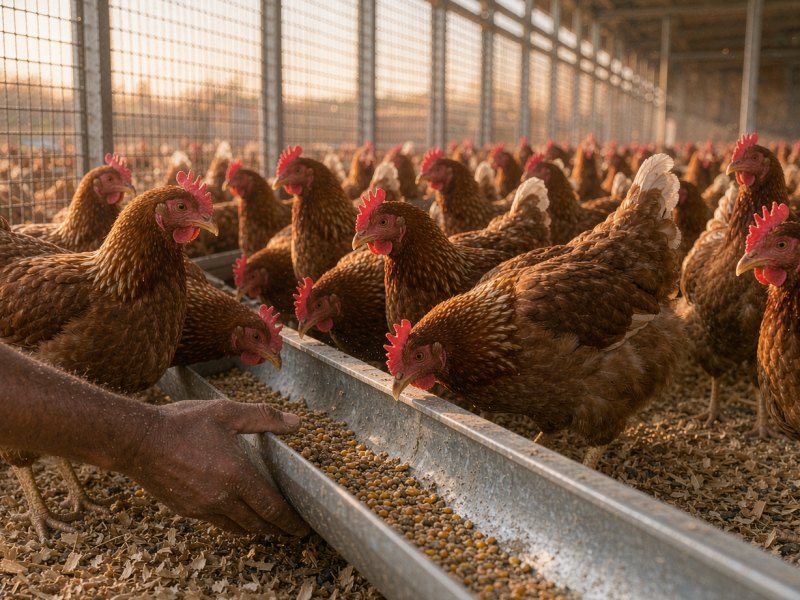
Most layer feed in West Africa is still bought on one number: the crude protein percentage printed on the bag. That number is a poor guide. Crude protein measures total nitrogen, including the part of the protein the bird cannot digest. Two bags can both say 17 per cent protein and deliver very different results once they are in the trough.
A hen does not need protein. She needs a small set of amino acids in the right ratio, delivered at the right time. Methionine comes first, then lysine, threonine, tryptophan, isoleucine and valine. Once the first limiting amino acid runs short, every other nutrient in the feed is partly wasted, and the bird simply lays fewer or smaller eggs.
Digestible amino acid formulation replaces the crude protein target with a digestibility-corrected target. In practice, standardised ileal digestible lysine for a commercial brown layer in production sits around 0.72 to 0.78 per cent of the diet, digestible methionine around 0.36 to 0.40 per cent, and the methionine plus cysteine pair around 0.62 to 0.68 per cent. These figures move with feed intake and body weight, so they must be checked against the breed guide for the flock you actually keep.
The savings come from three places. First, you can lower crude protein by one to one and a half points and still meet the bird's needs, which removes expensive soybean meal from the mix. Second, you can top up with synthetic methionine and lysine, which cost more per kilo but are almost fully available to the bird. Third, because less undigested protein reaches the caeca, litter stays drier and ammonia drops, which pays back in fewer respiratory problems.
There is a limit. Below roughly 15 to 15.5 per cent crude protein in a tropical layer diet, hens often struggle to eat enough to cover their needs, particularly in hot weather when intake falls. Pushing protein too low also leaves no margin for the non-essential amino acids the bird must build itself. Treat 15.5 per cent as a floor unless you have a nutritionist balancing the whole diet.
Four practical rules make the switch safe. Keep a fixed sample of the new diet and record egg numbers, egg weight and daily intake for two weeks against the old diet. Use a premix that declares digestible amino acid values, not just total. Keep the methionine to lysine ratio stable when you change ingredients. And never compensate for a cheap protein source by adding more premix, because minerals and vitamins have their own ceilings.
For farms buying in bulk, the biggest gain is usually not in the layer feed at all. It is in the rearing phase. Pullets fed on digestible amino acid targets reach the breed body weight target at 18 weeks with better uniformity, and a uniform flock holds peak production two to three weeks longer. That single effect is often worth more than any saving on the bag price.
If you are reformulating for the first time, ask your supplier for the digestible values of each batch, not the label claim. Jinmao Biotech supplies layer and pullet premixes with declared digestible amino acid specifications, and our technical team can review your current formula over WhatsApp before you commit to a new ingredient purchase.