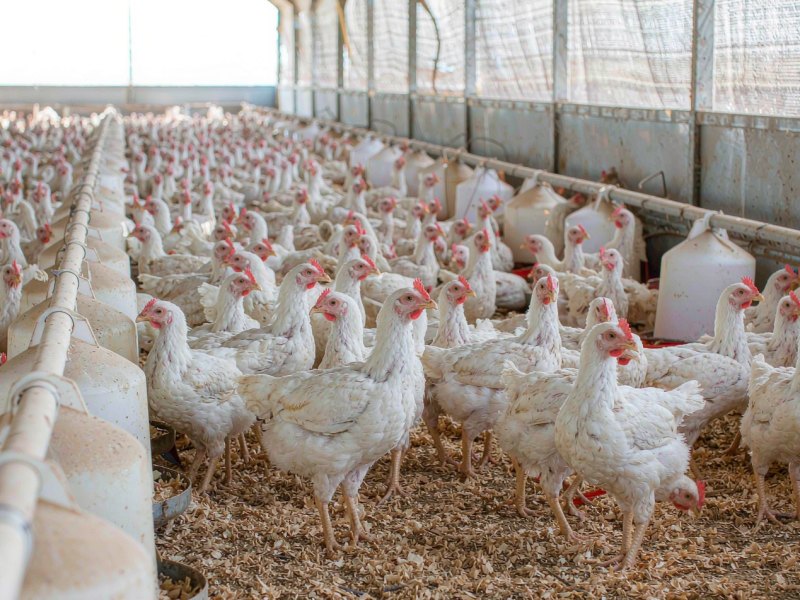
Every broiler farmer in West Africa knows the pattern. Around two to three weeks of age, birds start huddling, droppings turn wet or bloody, feed intake stalls and the litter under the drinkers stays damp. Within days the uniformity of the flock is gone. That is coccidiosis, and for many farms it is the most expensive disease of the growing phase, not because it kills the most birds, but because damaged intestines quietly destroy feed conversion long before anyone counts dead birds. Producers looking for reliable coccidiosis control in broiler chickens should treat it as a management problem first and a drug problem second.
What is happening inside the bird
Coccidiosis is caused by Eimeria, microscopic parasites that live and multiply in the cells lining the intestine. A bird swallows oocysts from the litter, and each sporulated oocyst can give rise to tens of thousands of new ones within a week. Damp litter around leaking drinkers is the perfect incubator, which is why outbreaks follow water problems, roof leaks and humid weather. The damage is immediate and practical: the gut wall thickens, nutrients are absorbed less efficiently, droppings become watery, feed conversion rises and weight gain slows.
Recognising the signs early
The first signals are subtle. Birds look ruffled, gather near the feeders without eating much, and water consumption climbs. Depending on the Eimeria species involved, droppings may turn pale, wet or bloody. Wet litter, especially under the drinker lines, is both a symptom and a cause. When a farm sees uneven growth after the second week together with damp litter, coccidiosis belongs at the top of the suspect list, before any expensive treatment decision is taken.
Prevention does most of the work
A sound programme combines four levers. First, litter: keep it dry, break up caked areas, remove wet patches every day and never spread fresh material over old litter during an outbreak. Second, drinker management: fix leaks, keep the water pressure right and check that no corner of the house stays permanently damp. Third, stocking density and ventilation: crowded houses with stale air keep the litter humid and the oocysts alive. Fourth, a planned anticoccidial programme, using an in-feed coccidiostat or ionophore and rotating products between batches so resistance does not settle in, or live vaccination where the hatchery offers it. Changing the product from one flock to the next matters more than changing it in the middle of a flock.
Support the gut while it heals
Even when the parasite is under control, the intestine needs time and support to recover. Vitamins A and K help repair the gut lining and limit bleeding, and vitamin B levels should be generous during recovery. Organic acids, probiotics and yeast-based additives help the beneficial gut flora return faster, which shortens the period of poor feed conversion after treatment. Recovered birds still need balanced minerals and vitamins through the finishing phase if they are to catch up on weight.
Jinmao Biotech supplies poultry vitamin and mineral premixes and gut-health feed additives used by broiler farms and feed mills across West Africa. If your flock is losing uniformity or your feed conversion keeps creeping up, send us a message on WhatsApp with your feeding programme and we will help you review it.