
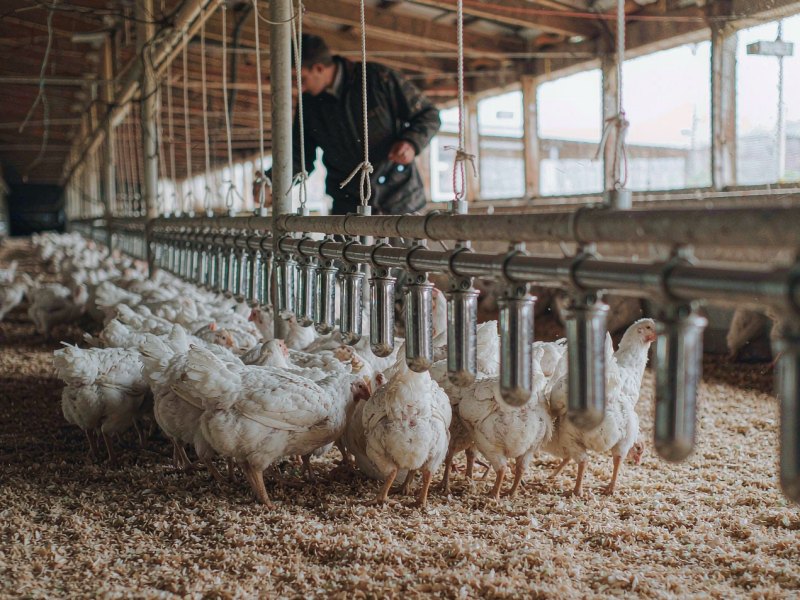
Water is the cheapest ingredient in a poultry ration and the most neglected. Inside drinking pipes, a thin layer of bacteria, algae and mineral scale builds up day after day. This layer is called biofilm, and in tropical poultry houses it forms faster than anywhere else, because warm water is an ideal culture medium. If you run a finger inside an open pipe end and the wall feels slippery, that is biofilm.
Biofilm causes three silent losses. First, it narrows pipes and blocks nipple drinkers, so weaker birds drink less and flock uniformity drops. Second, it shelters pathogens such as E. coli and Salmonella that survive disinfection because the chemicals never reach what hides under the film. Third, vitamins, medicines and vaccines given through the water stick to the film instead of reaching the birds. Wet litter around drinkers is often a biofilm symptom, and wet litter means ammonia, coccidiosis pressure and footpad lesions.
Cleaning starts with observation. Each week, open the end of one drinker line and look inside. A white cup filled from the line end tells you more than any theory, because cloudy, yellow or brown water means the film is active. Also check the water tank. Tanks standing in the sun grow algae within days, so keep every tank closed and shaded.
The routine that works combines flushing and disinfection. Flush every drinker line at full velocity at least twice a week, and always right after giving vitamins or medicine through the water, because those residues feed the biofilm. Once a week, dose a sanitizer through the lines. In most tropical conditions a chlorine solution holding 3 to 5 ppm free chlorine at the far end of the line is enough, provided the water pH stays between 5.5 and 6.5. Above pH 7 chlorine loses most of its power, so measure pH with simple pool test strips before you blame the product. Where scale is heavy, an organic acid cleaner dissolves the mineral crust that shelters bacteria.
Between flocks, do a full line recovery. Remove the end caps, drain the system, then fill everything with a stronger sanitizer solution and let it stand for 12 to 24 hours, following the product label. Brush what you can reach, flush at high speed until the water runs clear and neutral, and open a few nipples to check the flow. Checking the pressure regulator during the same visit is worth the time, because a leaking regulator keeps lines wet and invites the film to return.
Keep the records simple. One page per house, one line per week, one remark on smell and colour. After two or three cycles you will see the pattern and know which line needs attention before the birds tell you through wet litter. Producers who clean water lines properly often find that their vaccines work better and their birds respond faster to a good premix, because nutrients are finally absorbed as intended. If you are reviewing your nutrition programme this season, our team at Jinmao Biotech can help you match a poultry premix to your local feed ingredients, on WhatsApp or by email.