
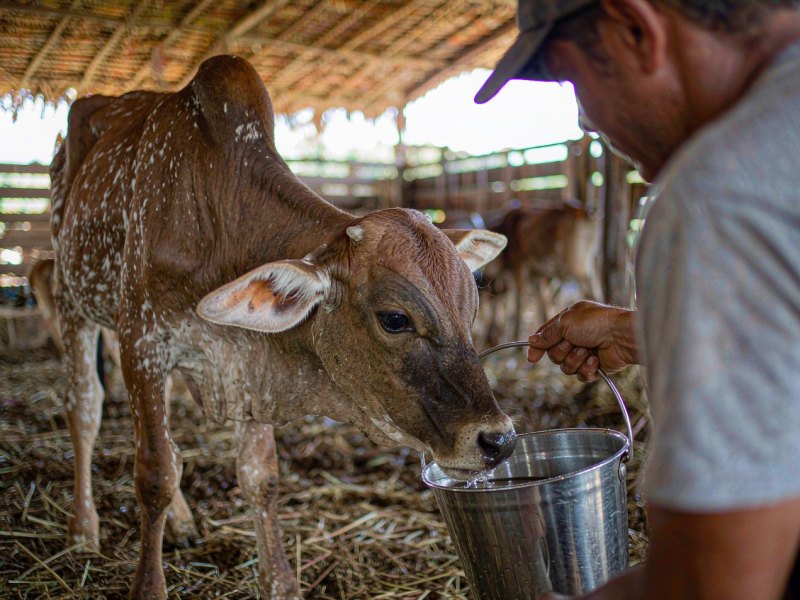
On many West African farms, a calf that falls sick in its first month is blamed on weather, breed or bad luck. In most cases the real cause sits in the first six hours after birth, when the calf either drank enough good colostrum or did not. Colostrum, the first milk a cow produces, carries the antibodies a calf needs, because antibodies do not cross the placenta in cattle. A calf that misses colostrum has almost no immune defence, and calves with failed transfer face a far higher risk of scours and pneumonia in the first weeks of life.
How much and how soon
Give the first feed as soon as the calf can stand, ideally within two hours of birth. The target is 10 to 12 percent of bodyweight in the first 24 hours. For a 35 to 40 kg calf that means about 3.5 to 4 litres at the first feeding and another 1.5 to 2 litres within eight to twelve hours. Timing matters because the calf's gut changes fast. It absorbs antibodies efficiently right after birth, absorption halves by six to twelve hours, and by about 24 hours the gut closes and can no longer pass antibodies into the blood. Feeding late delivers only a fraction of the protection the calf needs.
Check the quality before you feed
Good colostrum, drawn at the first milking after calving, is thick, creamy and yellowish. Thin, watery milk collected hours later is not colostrum anymore. The cheapest reliable check is a Brix refractometer. A reading of 22 percent or more means the colostrum is rich enough, while a reading below 20 percent means you should feed a larger volume or switch to stored colostrum from another cow. Serve it in a clean bucket kept only for colostrum, within 30 minutes of milking. To store it, refrigerate for up to 24 hours or freeze flat in bags for up to 12 months, and thaw in warm water at about 40 degrees. Never thaw in a microwave, because high heat destroys the antibodies.
What to do when there is no colostrum
When the dam dies, refuses the calf or dries off early, use frozen colostrum from another cow in the herd first. Commercial colostrum replacer powder with a high immunoglobulin content is the second option. Ordinary fresh milk or milk replacer is not a substitute in the first 24 hours, because it contains almost no antibodies.
Moving to milk replacer without setbacks
From day two or three, move the calf onto milk replacer or whole milk. Mix replacer at 125 to 150 grams per litre of water and feed at 39 to 40 degrees, in two meals of about 2 litres each. Choose a replacer with at least 20 percent crude protein, and for calves under three weeks old prefer an all-milk protein product, because young calves digest plant protein poorly. Cheap replacers based mostly on soy often cause loose dung and slow growth.
From day five to seven, offer a little calf starter feed in a shallow pan and keep clean water always available, because starter intake drives rumen development and cuts your milk costs. Do not wean by age alone, wean when the calf eats about 1 kg of starter per day for three days in a row. A starter ration built on good maize and balanced with a quality vitamin and mineral premix supports this transition. If you are formulating starter feed for your herd, our team can help you match a premix to your raw materials, contact us on WhatsApp for a quote.