
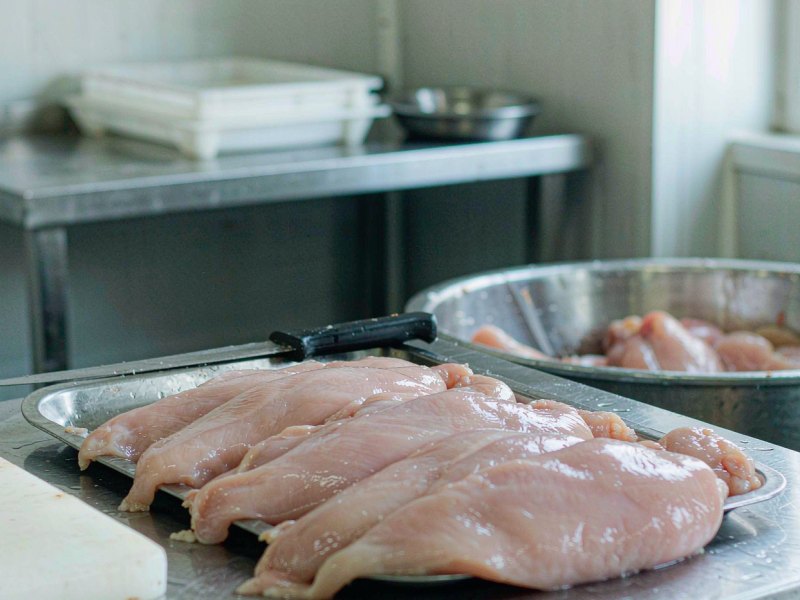
If you have ever sliced a fresh broiler fillet that felt hard and springy under the knife, or noticed white lines running along the meat, you have already met woody breast and white striping. Many West African processors and buyers ask what causes woody breast in broiler chickens, and the honest answer is that it is not a disease at all. It is the price of growing breast muscle faster than the rest of the body can support.
Woody breast is a fillet that feels firm or rigid when pressed, often looks pale and bulging, and releases little moisture on the cutting board. White striping shows as white streaks of fat and connective tissue running parallel to the muscle fibers. Neither condition makes the meat unsafe, but both change texture and value. Affected fillets cook unevenly, stay rubbery, absorb marinade poorly and lose more weight during cooking. Processors downgrade or reject them, and hotels and supermarkets notice immediately.
The root cause is speed. Modern broiler strains build breast muscle far faster than their blood vessels and connective tissue can grow with it. The center of the breast lives in a permanent state of low oxygen, oxidative stress builds up, and some muscle fibers degenerate and are replaced by connective tissue and fat. Risk rises with live weight, so woody breast is most common in heavy male birds above about three kilograms. Heat stress in the final weeks makes it worse, because heat adds another layer of oxidative damage.
Feeding choices decide how much of this risk you carry. Pushing the energy level of the finishing diet far above what the strain guide recommends drives fast weight gain but also faster fat deposition in the muscle. Match digestible amino acid levels to the energy in the diet so birds build lean meat rather than fat, and resist the temptation to chase extreme weights in very short cycles if your market does not pay for them. A bird sold at 2.6 kilograms with a clean fillet often earns more than a 3.2 kilogram bird with downgrades.
Antioxidant supply is your second lever. Vitamin E at around 100 to 150 IU per kilogram of feed, organic selenium at about 0.3 milligrams per kilogram and adequate zinc all help muscle cells cope with oxidative stress, which is why premix quality matters so much in the finishing phase. Keep mycotoxins out of the equation too, since contaminated feed adds oxidative damage on top of everything else. Store maize off the floor, use a reliable binder in risky seasons, and test suspect batches.
Management completes the picture. If woody breast shows up regularly, consider slaughtering one week earlier or at a slightly lighter weight, trimming the energy of the final diet, and protecting birds from heat stress in the last two to three weeks with shade, ventilation and cool water. Lower stocking density also reduces the problem, because crowded birds face more heat.
For farms selling live birds the defect is invisible at the gate, which is exactly why it can quietly damage a reputation. The day your birds reach a processor, a hotel kitchen or an export buyer, fillet firmness becomes part of your price. Treating meat quality as a nutrition issue rather than bad luck is what keeps those contracts.
If your fillets are coming back hard or streaked, review the vitamin and trace mineral programme before blaming the genetics. Jinmao Bio broiler premixes carry stabilized vitamins and well absorbed trace minerals designed for fast growing birds in hot climates. Send us your feed formula on WhatsApp and we will review it with you free of charge.