
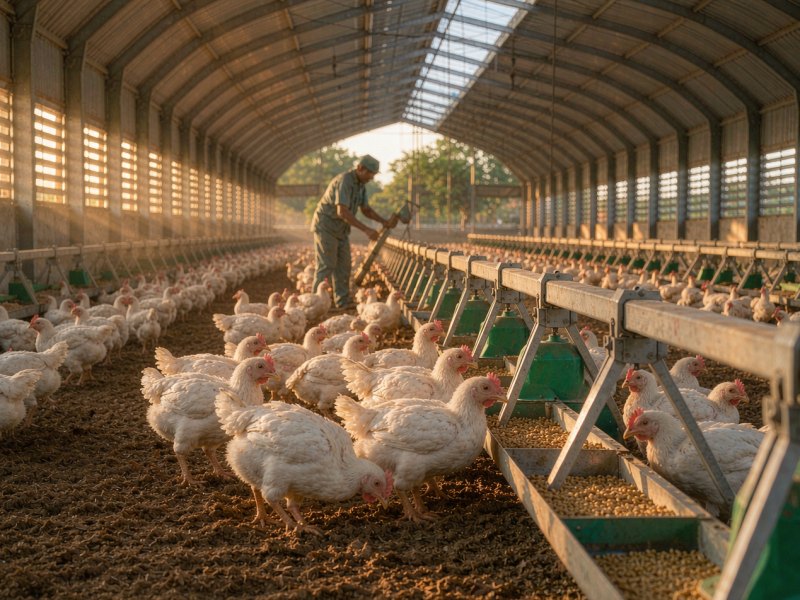
In broiler production the last twelve hours before the plant receive far less attention than the first six weeks, yet they decide how much of the flock reaches the table in good condition. Feed withdrawal before slaughter is not an optional saving. It is a management step that protects carcass hygiene, keeps rejection rates low and stops you paying for feed weight that will be lost anyway. Done well, it costs nothing. Done badly, it shows up as dirty carcasses, downgrades and higher mortality in transit.
Why an empty crop matters
A bird that arrives at the processing plant with a full crop is a risk at the evisceration line. When the crop or intestine ruptures during removal, feed material and gut contents spill onto the carcass, and the wash water then carries that contamination along the line. Processors therefore check crop fill at reception, and lots with full crops face more trimming, more reprocessing and, in the worst cases, rejection of the whole batch. Emptying the crop and gut before catching is the cheapest contamination control a farm can apply.
How long to withdraw feed before slaughtering broilers
How long to withdraw feed before slaughtering broilers is one of the most common questions we hear from farms, and the rule of thumb used across the industry is eight to twelve hours of total withdrawal. The clock starts when the feeders are lifted, not when the birds are caught. A crop empties within about six hours of the last meal, so the withdrawal period must also cover the time birds spend in crates and on the road. If the plant takes delivery at seven in the morning and catching begins around two, lift the feeders at about ten at night. Water should stay available right up to catching, because hydration helps the digestive tract empty and does not add contamination.
Longer is not better
Beyond about fourteen hours, birds lose weight quickly, roughly a few tenths of a per cent of bodyweight per hour, and dehydration sets in. Weak birds suffer more during loading, and mortality on the truck rises. An extended fast also drains muscle glycogen, which pushes meat pH up and can shorten shelf life. Shorter is just as bad, because under six hours the crop is still full and the hygiene problem returns. Aim for the middle of the window and keep it consistent from one catch to the next.
Farm-side details that make it work
Let the birds clear the feeders overnight so no stale feed is left to spoil. Remove spilled feed from the litter, because birds will keep picking in the final hours. After lifting the feed, dim the lights to calm the flock, keep the air moving and never withdraw water. Coordinate catching so crate time stays short, since every hour in a crate counts as withdrawal. Treat the schedule with the same discipline as a vaccination programme, and record the exact times so the team can adjust after each delivery.
Finisher nutrition carries the final stretch
Birds raised on a balanced finisher premix arrive in better condition, with stronger skeletons and less bruising risk during handling. Jinmao Biotech supplies premixes and feed additives for broiler finisher diets across West Africa. For a ration review or a quote, message our team on WhatsApp.