
Managing Heat Stress in Beef Cattle: Practical Steps for West African Feedlots
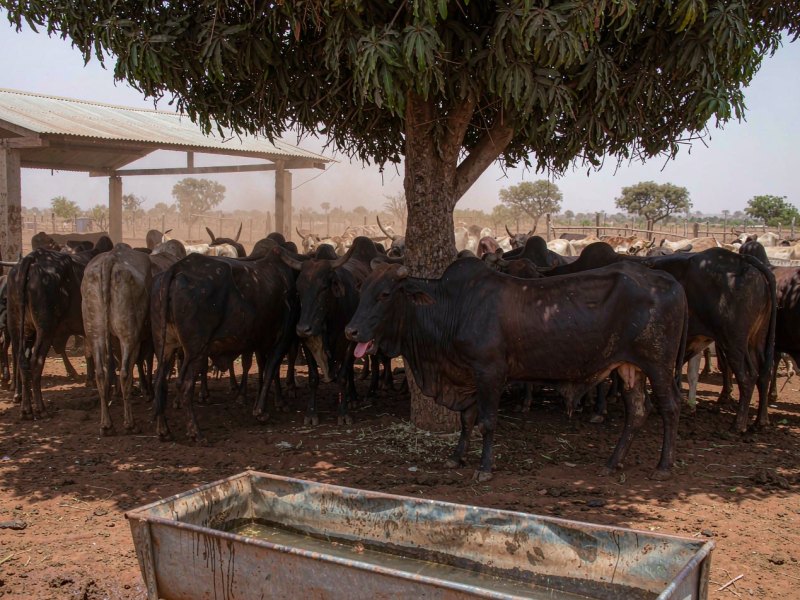
In the hot months across the Sahel and the coastal savannas, a feedlot bull that stood calmly at the trough in January starts leaving feed in February. Nothing has changed in the ration, the health programme or the market — only the temperature. Heat stress is one of the most under-diagnosed causes of poor daily gain in West African cattle, and it costs nothing to diagnose: watch the animals in the middle of the day.
Know the threshold
Cattle begin to feel heat when the Temperature-Humidity Index (THI) rises above 72. Between 75 and 78 feed intake starts to fall, and above 78 the drop can reach 20 per cent or more, alongside weaker fertility and slower gain. You do not need a weather station to notice it. Cattle that breathe with open mouths, dribble saliva, crowd into shade, stand in water troughs or refuse to lie down are telling you they are past their comfort zone. Count panting animals at midday: if more than one in ten is open-mouth panting, your feedlot has a heat problem.
Water and shade before anything else
A 400 kg bull in hot weather can drink 40 to 60 litres a day. Provide more trough space than you think necessary — at least 5 cm of trough edge per head — keep water clean and shaded, and check flow twice a day, because intake drops sharply when water is warm or fouled. Shade matters as much. Natural trees are excellent, but a simple corrugated roof at 3.5 to 4 metres, oriented east–west so it shades the largest floor area at midday, works well. Avoid overcrowding: a pen stocked beyond its capacity traps heat and blocks airflow.
Feed in the cool hours
Feeding generates heat inside the rumen, so the timing of the ration matters as much as its composition. Put the main meal in the late afternoon or evening, when temperatures fall and animals eat willingly, and cover the rest with a smaller distribution early in the morning. Never move, weigh, treat or transport cattle in the middle of the day — handling during peak heat can push marginal animals into genuine danger. Plan veterinary work and trucking for the early morning.
Adjust the ration, not only the timetable
When intake falls, the animal still needs the same nutrients each day, so the ration must become more concentrated: a slightly higher energy density, quality protein, and a vitamin–mineral premix that compensates for the lower total feed consumed. Heat stress also changes the minerals the animal loses: cattle excrete potassium, sodium and chloride in sweat and saliva, so a heat-adapted premix with elevated electrolytes, plus niacin, chromium and the antioxidant vitamins E and C, helps maintain intake and rumen function. Live yeast and buffers such as sodium bicarbonate stabilise rumen pH when animals slug-feed in the evening.
Genetics and long-term choices
Zebu breeds and their crosses handle heat far better than pure European types. When restocking or grading up, remember that a genotype that performs under a temperate climate may stagnate in April in Kano or Ouagadougou. This combination of water, shade, timing and adapted genetics is the most reliable answer to how to reduce heat stress in beef cattle under West African conditions.
Heat stress management is mostly discipline. Jinmao Biotech supplies vitamin–mineral premixes and feed additives formulated for tropical conditions; for a heat-stress premix recommendation adapted to your feedlot, contact us on WhatsApp with your current ration.